


kategória
szerző
cím
sorozat
betöltés...
kiadó
betöltés...
ISBN
évszám
ár
-
leírás
Előrendelhető
A mezők bármelyike illeszkedjen
A mezők mind illeszkedjen



iRR SCHMIDT WAS TRYING to squcczc a stcpladdcr into die narrow space behind the desk and hang up the picture that had come off the wall at the first faint rattling of flak.
"That's the third time he's fallen on his face in two weeks," he said, picking up the picture and brushing over the glass with his sleeve. It was an official and glorified portrait of the Fuehrer, on which the mean little smirk around the flabby mouth had been wiped off, the ordinary nose had been chiseled to nobler lines, and the puffy eyes had been filled with '...
online ár:
Webáruházunkban a termékek mellett feltüntetett fekete színű online ár csak internetes megrendelés esetén érvényes.
2980 Ft

Részletesen erről a termékről
Bővebb ismertető
iRR SCHMIDT WAS TRYING to squcczc a stcpladdcr into die narrow space behind the desk and hang up the picture that had come off the wall at the first faint rattling of flak.
"That's the third time he's fallen on his face in two weeks," he said, picking up the picture and brushing over the glass with his sleeve. It was an official and glorified portrait of the Fuehrer, on which the mean little smirk around the flabby mouth had been wiped off, the ordinary nose had been chiseled to nobler lines, and the puffy eyes had been filled with ' visionary fire. So popular had this version of the Fuehrer's face become all over Europe that people had forgotten how the real man looked. But this was an old trick, used by every ruler, from Caesar to Napoleon.
Schmidt looked at it somewhat disgustedly, climbed up his little ladder and began searching for a place to put the nail in. "The wall is so full of holes he won't stand another air raid," he mumbled. He had crooked nails in his mouth and was straightening out another crooked nail with the hammer. New nails were hard to get.
"They won't get through tonight; not with our magnificent new air defenses," said assistant clerjs Ahlsen; he wore the party badge and received his information from the editorials in Goebbels' "Das Reich." Herr KKebert came out from behind his glass partition to supervise the action. He w^ a great one at supervising others at work, was Kliebert. Formerly the mayor of a middle-sized town, he had resigned under the Weimar Re-
Termékadatok
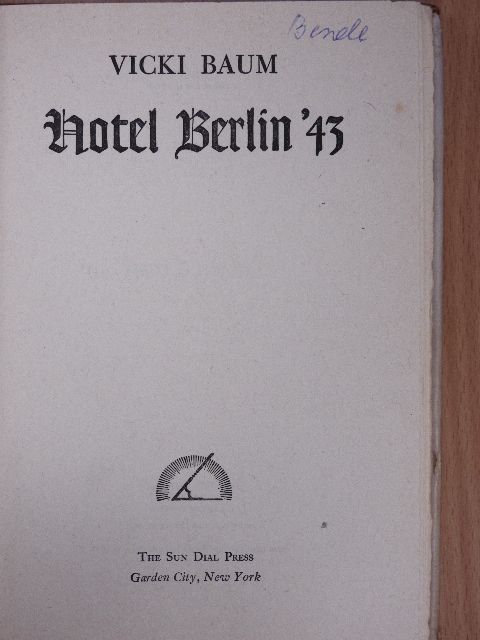
Cím: Hotel Berlin '43 [antikvár]
Szerző:
Vicki Baum
Kiadó: The Sun Dial Press
Kötés: Varrott keménykötés
Méret: 150 mm x 210 mm
Új vásárló vagyok!
új vásárlóval indíthatsz rendelést............