


kategória
szerző
cím
sorozat
betöltés...
kiadó
betöltés...
ISBN
évszám
ár
-
leírás
Előrendelhető
A mezők bármelyike illeszkedjen
A mezők mind illeszkedjen



PREFACE
This book's purpose is to supply an intimate view of how the modern Chinese poUtical system works, especially at times of strain and conflict. What do people say to each other while changing a set of government policies, or plotting to assassinate a dictator? How discreet are they in their telephone calls? Where do they meet? How do they assure themselves of the trustworthiness of their associates? What means do they use to ensure popular support? These are the questions that it is proposed to answer here, through a series of...
online ár:
Webáruházunkban a termékek mellett feltüntetett fekete színű online ár csak internetes megrendelés esetén érvényes.
8400 Ft

Részletesen erről a termékről
Bővebb ismertető
PREFACE
This book's purpose is to supply an intimate view of how the modern Chinese poUtical system works, especially at times of strain and conflict. What do people say to each other while changing a set of government policies, or plotting to assassinate a dictator? How discreet are they in their telephone calls? Where do they meet? How do they assure themselves of the trustworthiness of their associates? What means do they use to ensure popular support? These are the questions that it is proposed to answer here, through a series of portrayals of Chinese pohticians in action.
The raw material consists mainly of transcripts of the trial of Mao Zedong's widow and her associates in the "Gang of Four," and of six other conspirators, who tried to fashion the course of Chinese history according to their own ambitions and ideals—and failed.
The transcripts are taken from the Chinese television broadcasts of excerpts from the trial while it was in progress from November 1980 until January 1981. It must be emphasized that these are only excerpts. Much ofthe trial proceedings was never broadcast or printed in the press. But relays of court spectators—up to 800 strong, and changing every day—heard testimony and saw the behavior of defendants, witnesses, prosecutors, judges and counsel, and have doubtless described those proceedings to their friends and relatives all over China.
Eventually, perhaps, the proceedings will be published in full. The fullest version existing at present is the official book A Great Trial in Chinese History (New World Press, 24 Baiwanzhuang Road, Peking, 1981), which contains much material not broadcast on television, and
Termékadatok
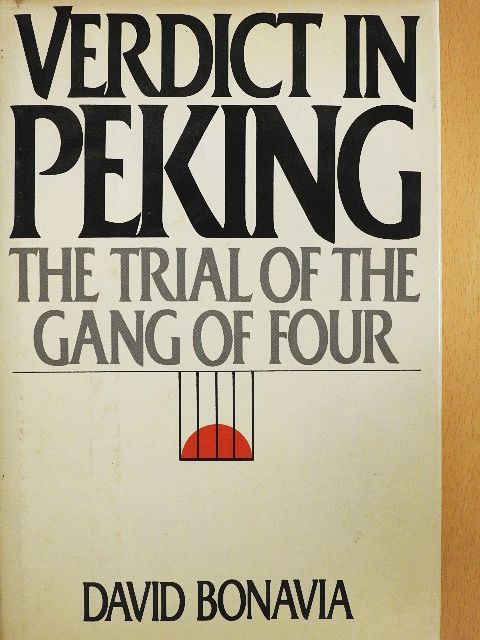
Cím: Verdict in Peking [antikvár]
Szerző:
David Bonavia
Kiadó: G. P. Putnam's Sons
Kötés: Fűzött keménykötés
ISBN: 0399128034
Méret: 160 mm x 240 mm
Új vásárló vagyok!
új vásárlóval indíthatsz rendelést............