


kategória
szerző
cím
sorozat
betöltés...
kiadó
betöltés...
ISBN
évszám
ár
-
leírás
Előrendelhető
A mezők bármelyike illeszkedjen
A mezők mind illeszkedjen



General information about WASARASA with particular emphasis on colour SARASA prints on paperby Kamon YoshimotoFor some (!me now, many people oufside Jopon hove been oware of the existence of SARASA textiles, as they are known. The patterned cloth, o Japanese product, is olsooften called WASARASA. (In the Japanese language, the prefix 'wo' is employed lo denote "Japan", "Japanese", etc.}Legend relates that "WATARI NO SARASA" textiles, from which the SARASA potterned-cloth tradition later developed, were first brought tojapon by Dutch,...
online ár:
Webáruházunkban a termékek mellett feltüntetett fekete színű online ár csak internetes megrendelés esetén érvényes.
4980 Ft

Részletesen erről a termékről
Bővebb ismertető
General information about WASARASA with particular emphasis on colour SARASA prints on paperby Kamon YoshimotoFor some (!me now, many people oufside Jopon hove been oware of the existence of SARASA textiles, as they are known. The patterned cloth, o Japanese product, is olsooften called WASARASA. (In the Japanese language, the prefix 'wo' is employed lo denote "Japan", "Japanese", etc.}Legend relates that "WATARI NO SARASA" textiles, from which the SARASA potterned-cloth tradition later developed, were first brought tojapon by Dutch, Portuguese and Chinese Iraders in the lime behween the end of the Muromachi period up to the Iwilight of the Momoyama period and the beginning of the Edo era. (Another theory, however, holds that the origins of SARASA date back to the Asuka or Nara periods).Whatever ihe case may be with regard to when the SARASA tradition really began, it is certain that ihe import of these textiles, through the free port of Hirado in Nogosoki and the trading island .of Deshima, reached a high point starting with the Momoyamo period and lasting until the beginning of the Edo era. This applies both to the quantity of material imported as well as lo the variety of different designs employed.The proof is to be found in the various trading records of the time, which never fail to mention SARASA textiles os one of the main imports, along with velvet, calico, edging, and similar materials.An examination of these documents on (he "import of printed weaves" yields a number of rather different wriiten denotations for the phrase "SARASAdoth". Although all ore pronounced in the some way, there are several ways of writing it, for example with two or sometimes three Chinese pictographs.Methods of recording the concept "SARASA" in Kotakona characters also differ. (Katakana is the indigenous Japanesealphobet). Many interpretations and theories have been formulated to explain the existence of such a broad variety of written denotations, but there is no truly precise explanation.The hypotheses that have been forwarded to date include the following:1. The word SARASA derives from thename of a place in India.2- The word originates from the Dutch.3.The root of the name is originally Portuguese.4.SARASA is a term from a southern Japanese dialect.5.The potterned textiles must have originated in the Saracen empire.Many such theories have circuloted among philosophers and scholars for some (ime now, but none of (hem can be described as conclusive. The only generally occepted theory is that there is no generally applicable theory, and one soon fends to speak of the mysterious nature of the textiles.A few people have lately expressed the opinion that SARASA might be an international industrial term for a pottern, whether of purely Japanese or foreign origin. A question posed to foreign visitors or guests about the Japonese word "SARASA", however, or even about the anglicised description, "Sarasatic Pottern", will generally elicit blank stares, except among foreigners who have been residing in Japan for some years. This is because the textiles which Japanese know as SARASA cbth are colled by many different names In other countries, for example printed textiles, printed cotton textiles, patterned cotton weaves, or colico painting. In Indonesia the term is "Batik", while the English speak of "chintz".But to return to the origins of the SARASA tradition, there is no doubt whotsoever that the radically new ond splendid pattemsof WATARI NO SARASA textiles imported from Europe and Chino inspired changes in many oreos, as did thecuriosityof their wild and unconstrained coloration. The reverberotions could be seen in the forms and arrangements of ornaments, designs, and clothing patterns, which had until then been exclusively stamped by the Jopanese sensibility. But the effects also extended to pictorial depictions of flowers and birds, and even impacted upon traditional, strictly realistic textile technology, which was designed to reflect the harmony of nature and landscapes. Indeed, the very thinking process of the Japanese, which is very difficult to lay down, underwent an awakening. It is certainly no understatement to obseive that these imports blew a fresh wind into the world of Japanese patterned weoves. As is v^ll known, theirsubtle influence worked upon later muslin patterns and the padded Japanese garments known os KOSODE.Seemingly all at once, SARASA textiles became a coveted and admired implement of fashion. Priced far too exorbitantly for the general population, they were mainly reserved for princes (daimyo), nobles, higher-ranked knights, and wealthy merchants. Beyond this they were employed ornamentally for the luxurious clothing associated with the art of the tea ceremony. Many a worthy samurai or renowned Master of the tea ceremony possessed the fine weoves. But the prohibitive prices kept them as out of the reach of common folk as o flower a( the peak of a high mountain.
Termékadatok
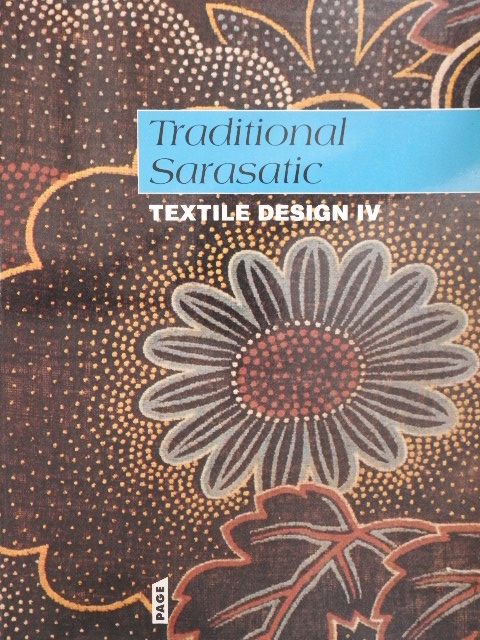
Cím: Traditional Sarasatic [antikvár]
Kiadó: Page One Publishing Pte Ltd
Kötés: Varrott papírkötés
ISBN: 9810053436
Méret: 230 mm x 300 mm
Új vásárló vagyok!
új vásárlóval indíthatsz rendelést............