


kategória
szerző
cím
sorozat
betöltés...
kiadó
betöltés...
ISBN
évszám
ár
-
leírás
Előrendelhető
A mezők bármelyike illeszkedjen
A mezők mind illeszkedjen


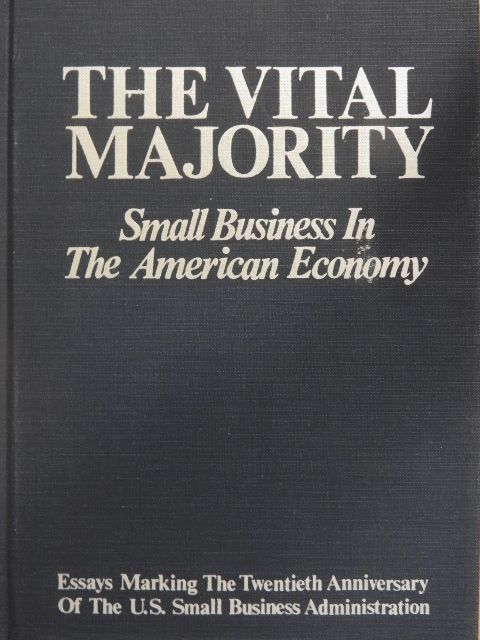
The Vital Majority [antikvár]
Anthony G. Chase, Charles Wolf, Kermit L. Culver, Neil Murphy, Ross M. Robertson

IntroductionAs Administrator of the United States Small Business Administration, I take great pleasure in presenting this volume of essays addressed to the problems, operations, and prospects of small business firms in the American economy. I am grateful to the scholars, businessmen, and Government officials who have contributed their individual efforts and who have thereby collectively assisted the Small Business Administration in celebrating the Twentieth Anniversary of its creation by Congress in 1953.By a relative reckoning, the Small...
online ár:
Webáruházunkban a termékek mellett feltüntetett fekete színű online ár csak internetes megrendelés esetén érvényes.
6480 Ft

Részletesen erről a termékről
Bővebb ismertető
IntroductionAs Administrator of the United States Small Business Administration, I take great pleasure in presenting this volume of essays addressed to the problems, operations, and prospects of small business firms in the American economy. I am grateful to the scholars, businessmen, and Government officials who have contributed their individual efforts and who have thereby collectively assisted the Small Business Administration in celebrating the Twentieth Anniversary of its creation by Congress in 1953.By a relative reckoning, the Small Business Administration is not an old Agency of the Federal Government. Nevertheless, as it approaches the age of full maturity, it seems fitting and proper that we pause for a moment to review the basic philosophy that led to its birth and which continues to serve as a foundation guide post for those of us who are responsible for executing the Congressional mandate.In establishing the Small Business Administration, Congress clearly was concerned with maintaining a viable, dynamic and progressive role for small enterprises in the American economy. Implicit in this desire was the basic notion that our traditional values of individual initiative, social mobility, and political freedom are significantly dependent upon the strength of the free enterprise system, a system which is itself dependent in large measure upon the maintenance of competition provided by the existence of a large and healthy community of small enterprises. Such a community ensures a dispersion of economic power and a safeguard against monopoly; it provides an economic climate conducive to individual initiative and opportunity; and it furnishes a countervailing force against the influence on public policy of an elite comprised of owners and managers of giant firms.By 1953, Congress had become vitally concerned about the future of small business in the United States. It particularly felt that imperfections in the money and capital markets threatened the survival of many small firms by unduly limiting their access to financial resources. Essentially, the problem was that commercial bank lending standards were geared to a defensible concern for the safety of deposits, whileno reasonable means was at hand for banks to undertake greater than average risks in their loan portfolios.xiii
Új vásárló vagyok!
új vásárlóval indíthatsz rendelést............