


kategória
szerző
cím
sorozat
betöltés...
kiadó
betöltés...
ISBN
évszám
ár
-
leírás
Előrendelhető
A mezők bármelyike illeszkedjen
A mezők mind illeszkedjen


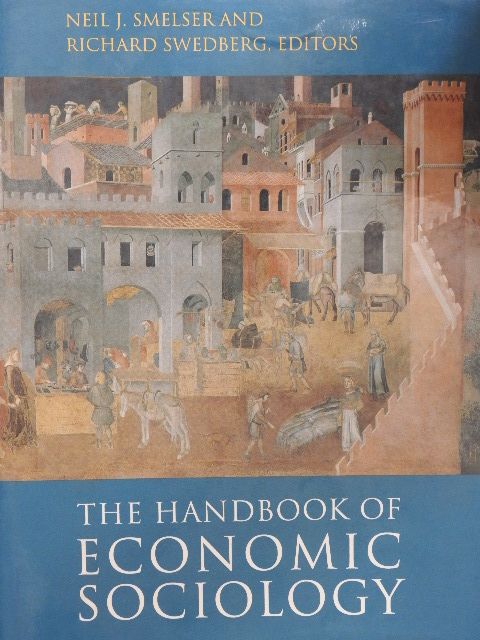
The Handbook of Economic Sociology [antikvár]
Geoffrey M. Hodgson, Oliver E. Williamson, Paul DiMaggio, Richard R. Nelson

PrefaceIn 1990, at the very outset of planning The Handbook of Economic Sociolo^y^ the editors discovered that each of us had come to the same conclusion, independently: that the field of economic sociology, in all its manifestations, had experienced such a season of vitality during the past ten years that the time was ripe for a general statement and consolidation of this accelerating work. Contemplating this volume on the eve of its publication, we find that conviction confirmed in the product. We hope that its readersstudents of economic...
online ár:
Webáruházunkban a termékek mellett feltüntetett fekete színű online ár csak internetes megrendelés esetén érvényes.
18000 Ft

Részletesen erről a termékről
Bővebb ismertető
PrefaceIn 1990, at the very outset of planning The Handbook of Economic Sociolo^y^ the editors discovered that each of us had come to the same conclusion, independently: that the field of economic sociology, in all its manifestations, had experienced such a season of vitality during the past ten years that the time was ripe for a general statement and consolidation of this accelerating work. Contemplating this volume on the eve of its publication, we find that conviction confirmed in the product. We hope that its readersstudents of economic sociology, economics, economic history, economic anthropology, and otherswill arrive at a similar conclusion.As its editors, we are the first to acknowledge that this book will not be read straight through from beginning to endlike some gripping spy thriller devoured during a plane tripexcept perhaps by those very few who agree to write reviews of it. Most readers will read selectively according to their interests and curiosity, and will begin by consulting the table of contents, the bibliographical references, or the index for preferred topics. Realizing this, we devote this preface to providing a general guide to the organization and contents of the volume.The Handbook has the following general structure. Part I (chapters 1-7) is a series of general treatments of the field from a variety of different perspectives. Part II (chapters 8-22), which we call the economic core, deals with economic systems, economic institutions, and economic behavior. Part III (chapters 23-31) concerns a number of intersections among the economy and various noneconomic sectors of the society.For those interested in learning about the scope of economic sociology, we recommend chapter 1 ("The Sociological Perspective on the Economy"), which defines and delimits the field, compares it to the concerns of mainstream economics, and reviews the contributions of some of its major figures. Supplementary information on economic sociology is in chapter 2 ("Culture and Economy," by Paul DiMaggio) and chapter 7 ("A Rational Choice Perspective on Economic Sociol-ogy"), in which James Coleman ventures some observations from the standpoint of the assumptions of economic rationality.Several other chapters in part I are written by economists, in keeping with Schumpeter's dictum that economic sociology belongs as much to economics as to sociology. Geoffrey Hodgson (in chapter 3, "The Return of Institutional Economics") outünes the basic ideas in what has been known traditionally as institutionalism, and attempts to develop this approach; his special treatment of Veblen establishes a strong conceptual link with economic sociology. In chapter 4 ("Transaction Cost Economics and Organization Theory" by Oliver Williamson), the reader will find a clear statement by one of its founders of what is called the new institutional economics; the chapter demonstrates that some economists have turned to the study of a distinctively sociological subject-matter, bringing their own perspectives to it. Richard Nelson (in chapter 5, "Evolutionary Theorizing about Economic Change") traces the revival, modification, and application of principles of evoludonary theory to economic change. Chapter 6 ("Learning by Monitoring: The Institutions of Economic Development" by Charles Sabel) provides a very comprehensive view of economic change, using approaches from political economy, politics, and moral philosophy. In general, part I establishes the fundamentally interdisciplinary character of economic sociology, a feature that is evident despite differences in disciplinary approach.Each chapter in the first section of part II "The Economy in Macrosociological Perspective"contains a mixture of traditional and innovative concerns. Gary Hamilton (chapter 8, "Civilizations and the Organization of Economies") takes the monumental comparative work of Max Weber as his starting point, but extends it in a variety of directions made possible by subsequent understandings. Both economists and sociologists have long been interested in the international aspects of economics, and Gary Gereffi (chapter 9, "The International Economy and
Termékadatok
Cím: The Handbook of Economic Sociology [antikvár]
Kiadó: Princeton University Press
Kötés: Fűzött keménykötés
ISBN: 0691034486
Méret: 200 mm x 260 mm
Új vásárló vagyok!
új vásárlóval indíthatsz rendelést............