


kategória
szerző
cím
sorozat
betöltés...
kiadó
betöltés...
ISBN
évszám
ár
-
leírás
Előrendelhető
A mezők bármelyike illeszkedjen
A mezők mind illeszkedjen


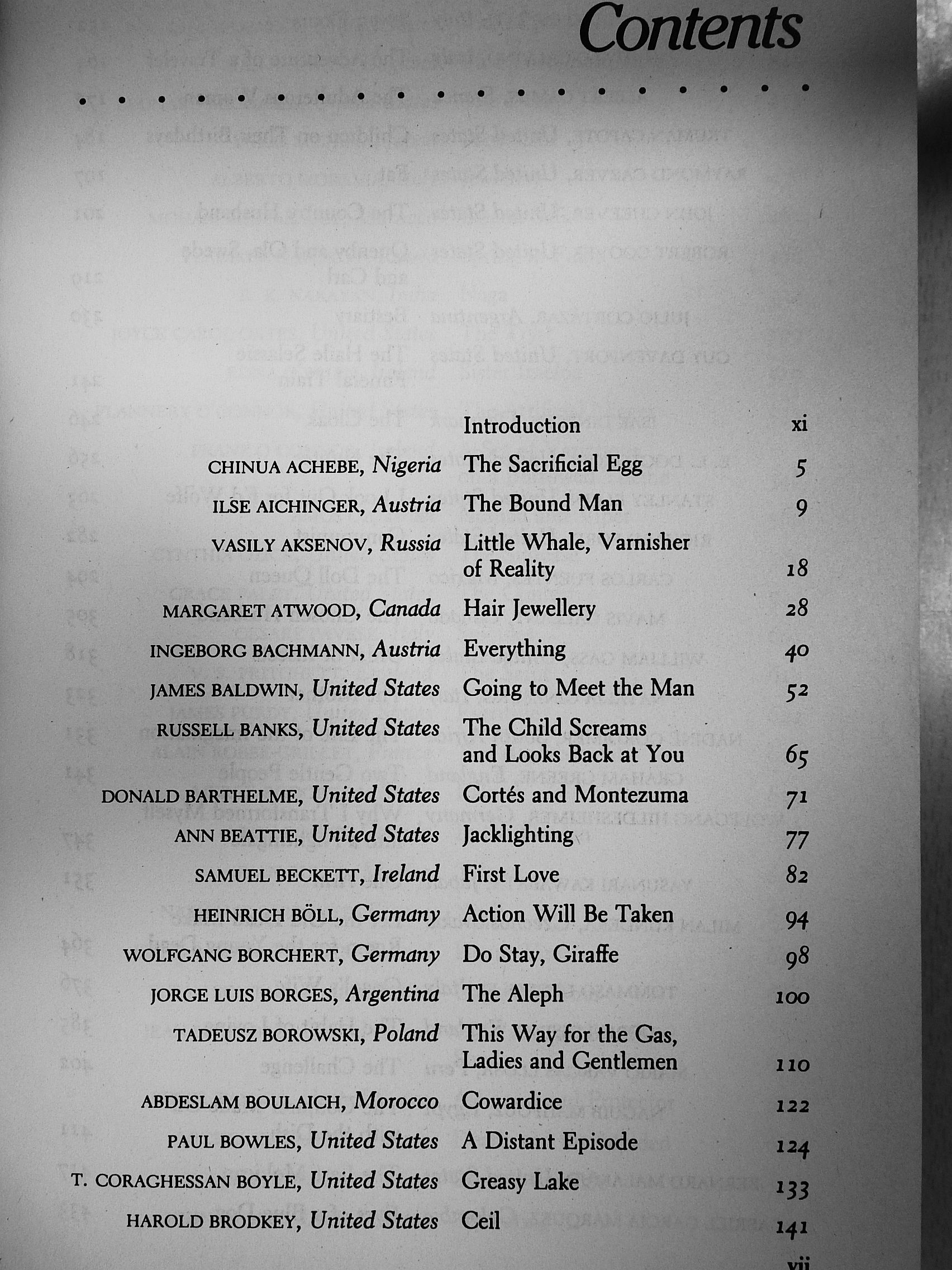
The Art of the Tale [antikvár]
Albert Camus, Heinrich Böll, John Cheever, Jorge Luis Borges, Mario Vargas Llosa, Samuel Beckett, Truman Capote

Introduction
Some aficionados of the short story would date the moment from the publication of Jorge Luis Borges's Ficciones or Vladimir Nabokov's first translated stories; others from the impressive volumes of collected stories that began to appear by such writers as Isaac Bashevis Singer, Graham Greene, Eudora Welty, V. S. Pritchett, John Cheever, Jean Stafford, Nadine Gordimer, and Gabriel Garcia Márquez; or in our recognition of the magnitude of Flannery O'Connor's achievement. Still others would locate that moment in the works of...
online ár:
Webáruházunkban a termékek mellett feltüntetett fekete színű online ár csak internetes megrendelés esetén érvényes.
3540 Ft

Részletesen erről a termékről
Bővebb ismertető
Introduction
Some aficionados of the short story would date the moment from the publication of Jorge Luis Borges's Ficciones or Vladimir Nabokov's first translated stories; others from the impressive volumes of collected stories that began to appear by such writers as Isaac Bashevis Singer, Graham Greene, Eudora Welty, V. S. Pritchett, John Cheever, Jean Stafford, Nadine Gordimer, and Gabriel Garcia Márquez; or in our recognition of the magnitude of Flannery O'Connor's achievement. Still others would locate that moment in the works of Julio Cortázar, Tommaso Landolfi, Juan Rulfo, R. K. Narayan and Italo Calvino, who picked up and extended the agreed-upon qualities of the folktale—^fantasy and legend. But regardless of whose pen fired the important moment, there seems to be general agreement that a serious revival of the short story is under way, as if at this particular juncture in the parlous history of our race we especially need its singular purity and magic, its devotion to the crucial—^though often eccentric and enigmatic—^moments in human life. And yet how fickle we serious readers of fiction must seem to the practitioners: one year we are conned by critics into believing that our story writers have turned to the novel because the market for stories has evaporated; and then, as we peruse our favorite paper of a late Sunday morning over good coffee, we discover the novel has died.
It seems to me, after considering a great deal of short fiction written since World War II, that in any given period since the war both the short story and the novel have not only maintained themselves, but have flourished. The story, when it is written well, is like strong emotion: it is alive, convincing, and difficult to expel from the body's metabolism. The goal of this anthology is to present stories capable of surviving the vagrancies of time and fashion, the fecklessness of our short memory and our impatience. I have selected eighty-two writers, each of whom has already produced a body of work that argues for representation here. The stories in The Art of the Tale were all published in English, in book form, after 1945, although some of the stories were actually written before the war. Nabokov's "Spring in Fialta" is one example; it first appeared in the emigre review Sovremenni'e Zapiski (Paris) in 1938, under the pen name of
XI
Termékadatok
Cím: The Art of the Tale [antikvár]
Szerző:
Albert Camus
,
Heinrich Böll
,
John Cheever
,
Jorge Luis Borges
,
Mario Vargas Llosa
,
Samuel Beckett
Truman Capote
Kiadó: Penguin Books Ltd
Kötés: Ragasztott papírkötés
ISBN: 0140079491
Méret: 150 mm x 230 mm

Albert Camus (1913−1960) a huszadik század egyik legnagyobb hatású írója. 1942-ben jelent meg Az idegen című regénye, mely ismert íróvá és az egzisztencializmus egyik vezéralakjává tette. 1957-ben Nobel-díjjal tüntették ki.
Új vásárló vagyok!
új vásárlóval indíthatsz rendelést............