


kategória
szerző
cím
sorozat
betöltés...
kiadó
betöltés...
ISBN
évszám
ár
-
leírás
Előrendelhető
A mezők bármelyike illeszkedjen
A mezők mind illeszkedjen



Foreword
The world has changed dramatically since The 7 Habits of Highly Effective People was first published. Life is more complex, more stressful, more demanding. We have transitioned from the Industrial Age into the Information / Knowledge Worker Age—with all of its profound consequences. We face challenges and problems in our personal lives, our families, and our organizations unimagined even one and two decades ago. These challenges are not only of a new order of magnitude, they are altogether different in kind.
These sweeping...
online ár:
Webáruházunkban a termékek mellett feltüntetett fekete színű online ár csak internetes megrendelés esetén érvényes.
5240 Ft

Részletesen erről a termékről
Bővebb ismertető
Foreword
The world has changed dramatically since The 7 Habits of Highly Effective People was first published. Life is more complex, more stressful, more demanding. We have transitioned from the Industrial Age into the Information / Knowledge Worker Age—with all of its profound consequences. We face challenges and problems in our personal lives, our families, and our organizations unimagined even one and two decades ago. These challenges are not only of a new order of magnitude, they are altogether different in kind.
These sweeping changes in society and rumbling shifts in the digitized global marketplace give rise to a very important question—one I'm asked fairly often: "Are The 7 Habits of Highly Effective People still relevant today?" And for that matter, "Will they be relevant ten, twenty, fifty, one hundred years from now?" My answer: the greater the change and more difficult our challenges, the more relevant the habits become. The reason: our problems and pain are universal and increasing, and the solutions to the problems are and always will be based upon uruversal, timeless, self-evident principles common to every enduring, prospering society throughout history. I did not invent them and take no credit for them. I've simply identified and organized them into a sequential framework.
One of the most profound learnings of my life is this: if you want to achieve your highest aspirations and overcome your greatest challenges, identify and apply the principle or natural law that governs the results you seek. How we apply a principle will vary greatly and will be determined by our unique strengths, talents, and creativity, but, ultimately, success in any endeavor is always derived from acting in harmony with the principles to which the success is tied.
Many people do not think this way, at least consciously. In fact, you will increasingly find that principled solutions stand in stark contrast to the common practices and thinking of our popular culture. Allow me to illustrate this contrast with a few of the most common human challenges we face.
Fear and insecurity. So many people today are gripped with a sense
of fear. They fear for the future. They feel vulnerable in the work-
Termékadatok
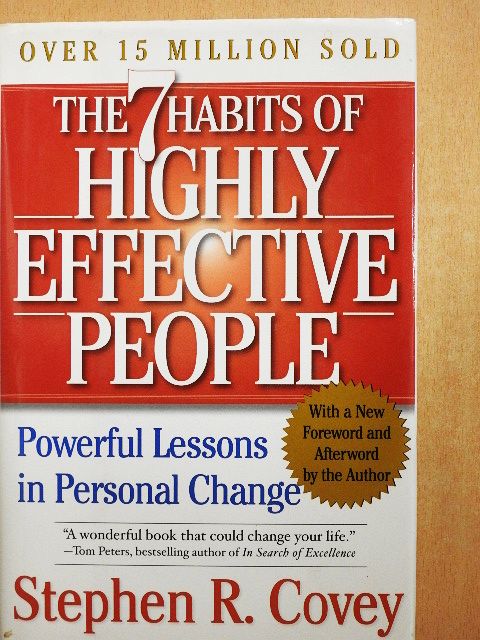
Cím: The 7 Habits of Highly Effective People [antikvár]
Szerző:
Stephen R. Covey
Kiadó: Free Press
Kötés: Fűzött keménykötés
ISBN: 0743272455
Méret: 170 mm x 240 mm
Új vásárló vagyok!
új vásárlóval indíthatsz rendelést............