


kategória
szerző
cím
sorozat
betöltés...
kiadó
betöltés...
ISBN
évszám
ár
-
leírás
Előrendelhető
A mezők bármelyike illeszkedjen
A mezők mind illeszkedjen


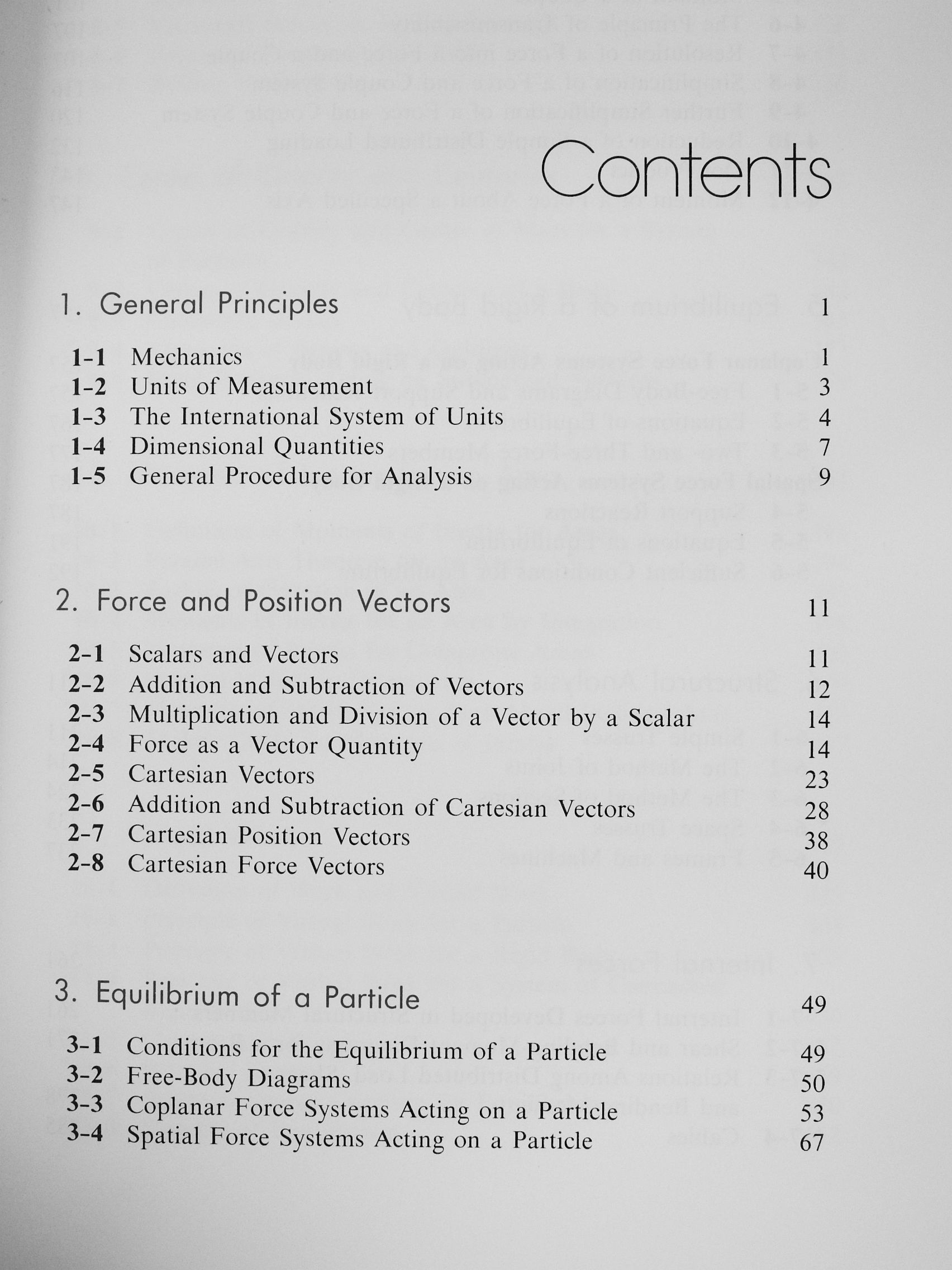

Preface
The purpose of this book is to provide the student with a clear and thorough presentation of the theory and application of the principles of engineering mechanics. Emphasis is placed on developing the student's ability to analyze problems—a most important skill for any engineer. Furthermore, the Systeme International or SI system of units is used for numerical work since this system is intended in time to become the worldwide standard for measurement.
The contents of each chapter are organized into well-defined sections. Selected...
online ár:
Webáruházunkban a termékek mellett feltüntetett fekete színű online ár csak internetes megrendelés esetén érvényes.
5980 Ft

Részletesen erről a termékről
Bővebb ismertető
Preface
The purpose of this book is to provide the student with a clear and thorough presentation of the theory and application of the principles of engineering mechanics. Emphasis is placed on developing the student's ability to analyze problems—a most important skill for any engineer. Furthermore, the Systeme International or SI system of units is used for numerical work since this system is intended in time to become the worldwide standard for measurement.
The contents of each chapter are organized into well-defined sections. Selected groups of sections contain the development and explanation of specific topics, illustrative example problems, and a set of problems designed to test the student's ability to apply the theory. Many of the problems depict realistic situations encountered in engineering practice. It is hoped that this realism will both stimulate the student's interest in engineering mechanics and provide a means for developing the skill to reduce any such problem from its physical description to a model or symbolic representation to which the principles of mechanics may be applied. In any set, the problems are arranged in order of increasing difficulty. Furthermore, the answers to all but every fourth problem, which is indicated by an asterisk, are listed in the back of the book. SI units are used in all the numerical examples and problems; however, for the convenience of some instructors, every fifth problem is stated twice, once in SI units and again in FPS units.
Besides a change from FPS to SI units and the addition of many new problems, this book differs from the author's first edition. Engineering Mechanics: Statics, in many respects. Most of the text material has been completely rewritten so that topics within each section are categorized into subgroups, defined by boldface titles. The purpose of this is to present a structured method for introducing each new definition or concept, and to provide a convenient means for later reference or review of the material.
Termékadatok
Cím: Statics [antikvár]
Szerző:
R. C. Hibbeler
Kiadó: Macmillan Publishing Co.
Kötés: Fűzött keménykötés
ISBN: 0023540206
Méret: 210 mm x 240 mm
Új vásárló vagyok!
új vásárlóval indíthatsz rendelést............