


kategória
szerző
cím
sorozat
betöltés...
kiadó
betöltés...
ISBN
évszám
ár
-
leírás
Előrendelhető
A mezők bármelyike illeszkedjen
A mezők mind illeszkedjen



^reface
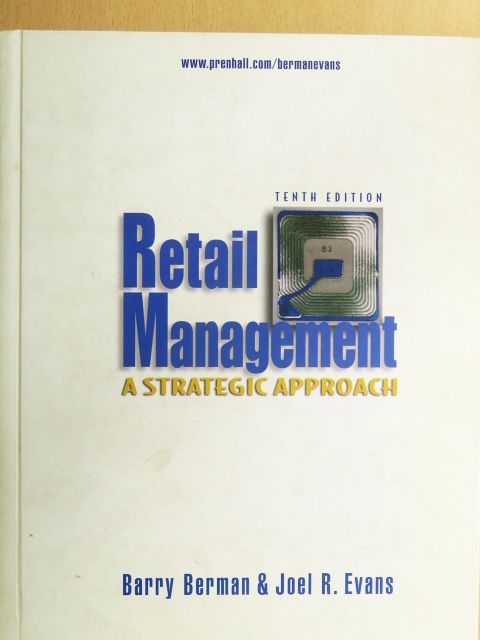
This edition marks a major milestone for Retail Manageiuent: A Strategic Approach— a Tenth Edition. We are both pleased and truly thankful to have produced a book that has been so enduringly popular. As we move further into the new millennium, our goal is to seamlessly meld the traditional framework of retailing with the realities of the competitive environment and the emergence of high-tech as a backbone for retailing. We have worked hard to produce a cutting-edge text, while retaining the coverage and features most desired by...
online ár:
Webáruházunkban a termékek mellett feltüntetett fekete színű online ár csak internetes megrendelés esetén érvényes.
6400 Ft

Részletesen erről a termékről
Bővebb ismertető
^reface
This edition marks a major milestone for Retail Manageiuent: A Strategic Approach— a Tenth Edition. We are both pleased and truly thankful to have produced a book that has been so enduringly popular. As we move further into the new millennium, our goal is to seamlessly meld the traditional framework of retailing with the realities of the competitive environment and the emergence of high-tech as a backbone for retailing. We have worked hard to produce a cutting-edge text, while retaining the coverage and features most desired by professors and students.
The concepts of a strategic approach and a retail strategy remain our cornerstones. With a strategic approach, the fundamental principle is that the retailer has to plan for and adapt to a complex, changing environment. Both opportunities and constraints must be considered. A retail strategy is the overall plan or framework of action that guides a retailer. Ideally, it will be at least one year in duration and outline the mission, goals, consumer market, overall and specific activities, and control mechanisms of the retailer. Without a pre-defined and well-integrated strategy, the firm may flounder and be unable to cope with the environment that surrounds it. Through our text, we want the reader to become a good retail planner and decision maker and to be able to adapt to change.
Retail Management is designed as a one-semester text for students of retailing or retail management. In many cases, such students will have already been exposed to marketing principles. We feel retailing should be viewed as one form of marketing and not distinct from it.
HOW THE TEXT IS ORGANIZED
Retail Management: A Strategic Approach has eight parts. Part One introduces the field of retailing, the basics of strategic planning, the importance of building and maintaining relations, and the decisions to be made in owning or managing a retail business. In Part Two, retail institutions are examined in terms of ownership types, as well as store-based, nonstore-based, electronic, and nontraditional strategy mixes. The wheel of retailing, scrambled merchandising, the retail life cycle, and the Web are covered. Part Three focuses on target marketing and information-gathering methods, including discussions of why and how consumers shop and the retailing information system and data warehouse. Part Four presents a four-step approach to location planning: trading-area analysis, choosing the most desirable type of location, selecting a general locale, and deciding on a specific site.
Part Five discusses the elements involved in managing a retail business: the retail organization structure, human resource management, and operations management (both financial and operational). Part Six deals with merchandise management—developing and implementing merchandise plans, the financial aspects of merchandising, and pricing. In Part Seven, the ways to communicate with customers are analyzed, with special attention paid to retail image, atmosphere, and promotion. Part Eight deals with integrating and controlling a retail strategy.
At the end of the text, Appendix A highlights career opportunities in retailing. Appendix B explains the components of the Web site and how to use it, and Appendix C is a comprehensive glossary.
XV
Termékadatok
Cím: Retail Management [antikvár]
Kiadó: Pearson Education
Kötés: Fűzött kemény papírkötés
ISBN: 0131870165
Méret: 220 mm x 280 mm
Új vásárló vagyok!
új vásárlóval indíthatsz rendelést............