


kategória
szerző
cím
sorozat
betöltés...
kiadó
betöltés...
ISBN
évszám
ár
-
leírás
Előrendelhető
A mezők bármelyike illeszkedjen
A mezők mind illeszkedjen



PATAKI GÁBOR
A polikróm monokróm
A Magyar Festők Társasága Monokrómia című kiállítása elé
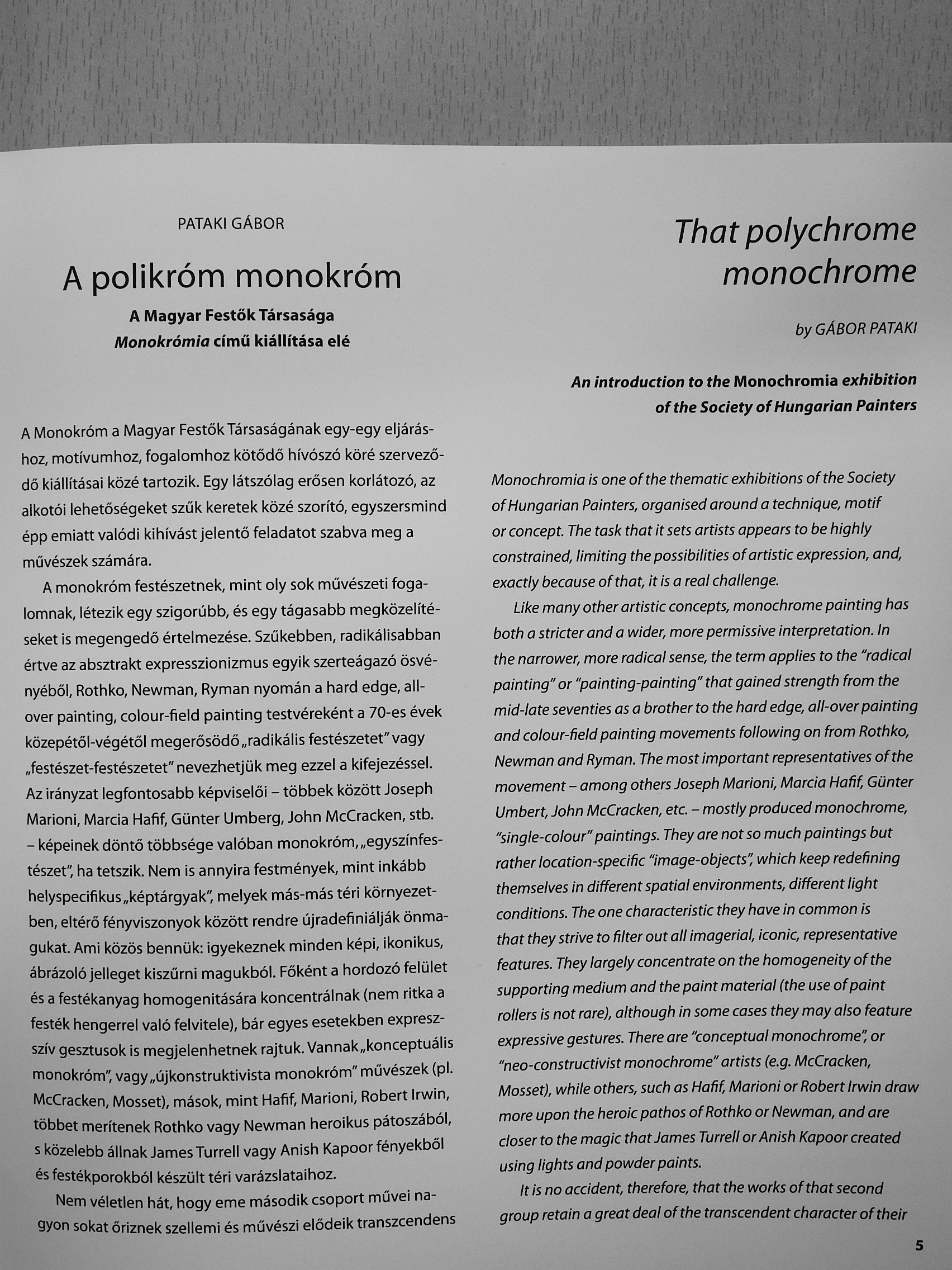
A Monokróm a Magyar FestőkTársaságának egy-egy eljáráshoz, motívumhoz, fogalomhoz kötődő hívószó köré szerveződő kiállításai közé tartozik. Egy látszólag erősen korlátozó, az alkotói lehetőségeket szűk keretek közé szorító, egyszersmind épp emiatt valódi kihívást jelentő feladatot szabva meg a művészek számára.
A monokróm festészetnek, mint oly sok művészeti fogalomnak, létezik egy...
online ár:
Webáruházunkban a termékek mellett feltüntetett fekete színű online ár csak internetes megrendelés esetén érvényes.
1880 Ft

Részletesen erről a termékről
Bővebb ismertető
PATAKI GÁBOR
A polikróm monokróm
A Magyar Festők Társasága Monokrómia című kiállítása elé
A Monokróm a Magyar FestőkTársaságának egy-egy eljáráshoz, motívumhoz, fogalomhoz kötődő hívószó köré szerveződő kiállításai közé tartozik. Egy látszólag erősen korlátozó, az alkotói lehetőségeket szűk keretek közé szorító, egyszersmind épp emiatt valódi kihívást jelentő feladatot szabva meg a művészek számára.
A monokróm festészetnek, mint oly sok művészeti fogalomnak, létezik egy szigorúbb, és egy tágasabb megközelítéseket is megengedő értelmezése. Szűkebben, radikálisabban értve az absztrakt expresszionizmus egyik szerteágazó ösvényéből, Rothko, Newman, Ryman nyomán a hard edge, all-over painting, colour-field paínting testvéreként a 70-es évek közepétől-végétől megerösödö„radikális festészetet" vagy „festészet-festészetet" nevezhetjük meg ezzel a kifejezéssel. Az irányzat legfontosabb képviselői - többek között Joseph Marioni, Marcia Hafif, Günter Umberg, John McCracken, stb. - képeinek döntő többsége valóban monokróm,„egyszínfes-tészet", ha tetszik. Nem is annyira festmények, mint inkább helyspecifikus„képtárgyak", melyek más-más téri környezetben, eltérő fényviszonyok között rendre újradefiniálják önmagukat. Ami közös bennük: igyekeznek minden képi, ikonikus, ábrázoló jelleget kiszűrni magukból. Főként a hordozófelület és a festékanyag homogenitására koncentrálnak (nem ritka a festék hengerrel való felvitele), bár egyes esetekben expresz-szív gesztusok is megjelenhetnek rajtuk. Vannak„konceptuáíis monokróm", vagy „újkonstruktivista monokróm" művészek (pl. McCracken, Mosset), mások, mint Hafif, Marioni, Róbert Irwin, többet merítenek Rothko vagy Newman heroikus pátoszából, s közelebb állnak James Turrell vagy Anish Kapoor fényekből és festékporokból készült téri varázslataihoz.
Nem véletlen hát, hogy eme második csoport művei nagyon sokat őriznek szellemi és művészi elődeik transzcendens
That polychrome monochrome
by GÁBOR PATAKI
An introduction to the Monochromia exhibition of the Society of Hungarian Painters
Monochromia is one of the thematic exhibitions of the Society of Hungarian Painters, organised around a technique, motif or concept. The tasl< that it sets artists appears to be highly constrained, limiting the possibilities of artistic expression, and, exactly because of that, it is a real challenge.
Like many other artistic concepts, monochrome painting has both a stricter and a wider, more permissive interpretation. In the narrower, more radical sense, the term applies to the "radical painting" or "painting-painting" that gained strength from the mid-late seventies as a brother to the hard edge, all-over painting and colour-field painting movements following on from Rothko, Newman and Ryman. The most important representatives of the movement - among others Joseph Marioni, Marcia Hafif, Günter Umbert, John McCracken, etc. - mostly produced monochrome, "single-colour" paintings. They are not so much paintings but rather location-specific "image-objects", which keep redefining themselves in different spatial environments, different light conditions. The one characteristic they have in common is that they strive to filter out all imagerial, iconic, representative features. They largely concentrate on the homogeneity of the supporting medium and the paint material (the use of paint rollers is not rare), although in some cases they may also feature expressive gestures. There are "conceptual monochrome", or "neo-construct/V/sf monochrome" artists (e.g. McCracken, Mosset), while others, such as Hafif, Marioni or Robert Irwin draw more upon the heroic pathos of Rothko or Newman, and are closer to the magic that James Turrell or Anish Kapoor created using lights and powder paints.
It is no accident, therefore, that the works of that second group retain a great deal of the transcendent character of their
Termékadatok
Cím: Monokrómia [antikvár]
Kiadó: Magyar Festők Társasága
Kötés: Fűzött papírkötés
ISBN: 9786155074073
Méret: 210 mm x 230 mm
Új vásárló vagyok!
új vásárlóval indíthatsz rendelést............