


kategória
szerző
cím
sorozat
betöltés...
kiadó
betöltés...
ISBN
évszám
ár
-
leírás
Előrendelhető
A mezők bármelyike illeszkedjen
A mezők mind illeszkedjen


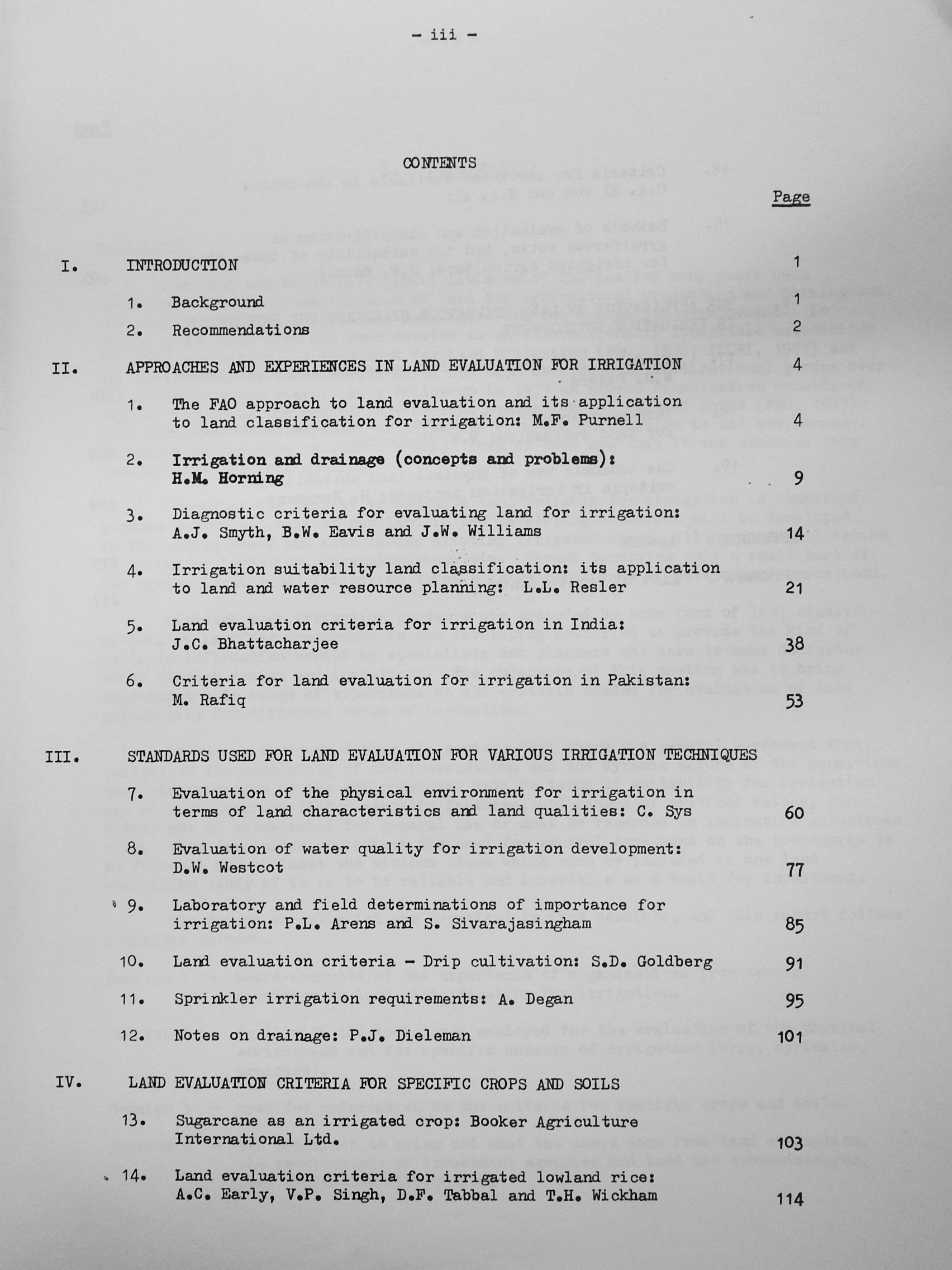
Land Evaluation Criteria for Irrigation [antikvár]
D. W. Westcot, J. C. Bhattacharjee, M. Rafiq

I. INTRODUCTION
BACKOROUND
The Larrl awi Water Development Division of FAO has for many years been concerned with the classification of land for agricultural production and development and many of the larxi evaluations made have been for irrigation development. In recent years much work has been devoted to an internationally acceptable methodology for larri evaluation. A Framework for Land Evaluation (PAO, 1976; IILRI, 1977) set out the principles arii concepts which had been developed by multinational groups over the previous seven years....
online ár:
Webáruházunkban a termékek mellett feltüntetett fekete színű online ár csak internetes megrendelés esetén érvényes.
7840 Ft

Részletesen erről a termékről
Bővebb ismertető
I. INTRODUCTION
BACKOROUND
The Larrl awi Water Development Division of FAO has for many years been concerned with the classification of land for agricultural production and development and many of the larxi evaluations made have been for irrigation development. In recent years much work has been devoted to an internationally acceptable methodology for larri evaluation. A Framework for Land Evaluation (PAO, 1976; IILRI, 1977) set out the principles arii concepts which had been developed by multinational groups over the previous seven years. As a follow-up in 1977 an expert consultation considered ways of improving the methodology of land evaluation for rainfed lands (FAO, 1977) with emphasis on the physical requirements of crops in relation to the environment. Irrigated agriculture is such a special form of land use that it was excluded from consideration at that meeting»
Improving o\ir ability to evaluate land reliably for irrigation is important becaiise extensive areas of new land in the developing countries will be developed in the coming years and even larger existing irrigated areas will need rehabilitation by drainage, levelling, recanalisation, etc. Though occupying only a small part of the agricultural land, irrigation takes a large percentage of development investment.
Although most irrigation projects are preceded by some form of land classification, it is often inadequate in the developing countries to provide the kind of reliable information needed by specialists and planners who have to make decisions about project design and investment. The objective of this meeting was to bring together a wide range of experience on the criteria needed for evaluation of land suitability for different forms of irrigation.
It became apparent during the meeting that there was general agreement that, because of the complexity of the interactions and the dynamic nature of the conditions, the interpretation of the environmental data in terras of suitability for irrigation was so site-specific that diagnostic features, and. ranges of critical values, can either not be established for general use or must be regarded as indicative guidelines only. This conclusion emphasizes the need for general agreement on the procediires to be followed and at least the minimum items which must be included in any land evaluation study if it is to be reliable and acceptable as a basis for investment.
The expert consultation was organized in five sessions, and this report follows a similar pattern.
Session 1 - heard accounts of the experience of organizations from several countries in land classification for irrigation.
Session 2 - dealt with the techniques employed for the evaluation of the physical environment and for specific aspects of irrigation (drip, spriricler, drainage).
Session 3 - provided information on the criteria for specific crops and soils.
Session 4 - was concerned to bring out what the users want from lani evaluation, the requirements of investment agencies awi land use economists for land evaluation information.
Termékadatok
Cím: Land Evaluation Criteria for Irrigation [antikvár]
Kötés: Ragasztott papírkötés
ISBN: 9251008264
Méret: 210 mm x 280 mm
Új vásárló vagyok!
új vásárlóval indíthatsz rendelést............