


kategória
szerző
cím
sorozat
betöltés...
kiadó
betöltés...
ISBN
évszám
ár
-
leírás
Előrendelhető
A mezők bármelyike illeszkedjen
A mezők mind illeszkedjen



Preface
Heart rhythm disturbances remain under intensive investigation. The establishment of coronary care units and advances in diagnosis and therapy continue to give great impetus to this study. It is vital for members of the health professions caring for patients with abnormal heart rhythms to be able to recognize the common arrhythmias. This book is simply written and graphically illustrated to provide a firm foundation with a step- by-step approach. After you have learned the basic arrhythmias and have completed all the exercises and...
online ár:
Webáruházunkban a termékek mellett feltüntetett fekete színű online ár csak internetes megrendelés esetén érvényes.
2980 Ft

Részletesen erről a termékről
Bővebb ismertető
Preface
Heart rhythm disturbances remain under intensive investigation. The establishment of coronary care units and advances in diagnosis and therapy continue to give great impetus to this study. It is vital for members of the health professions caring for patients with abnormal heart rhythms to be able to recognize the common arrhythmias. This book is simply written and graphically illustrated to provide a firm foundation with a step- by-step approach. After you have learned the basic arrhythmias and have completed all the exercises and practice rhythm analyses, the book can serve as a study guide as well as a teaching, reference, and review manual. When using the program as a review, one can cover the basic arrhythmias in one sitting.
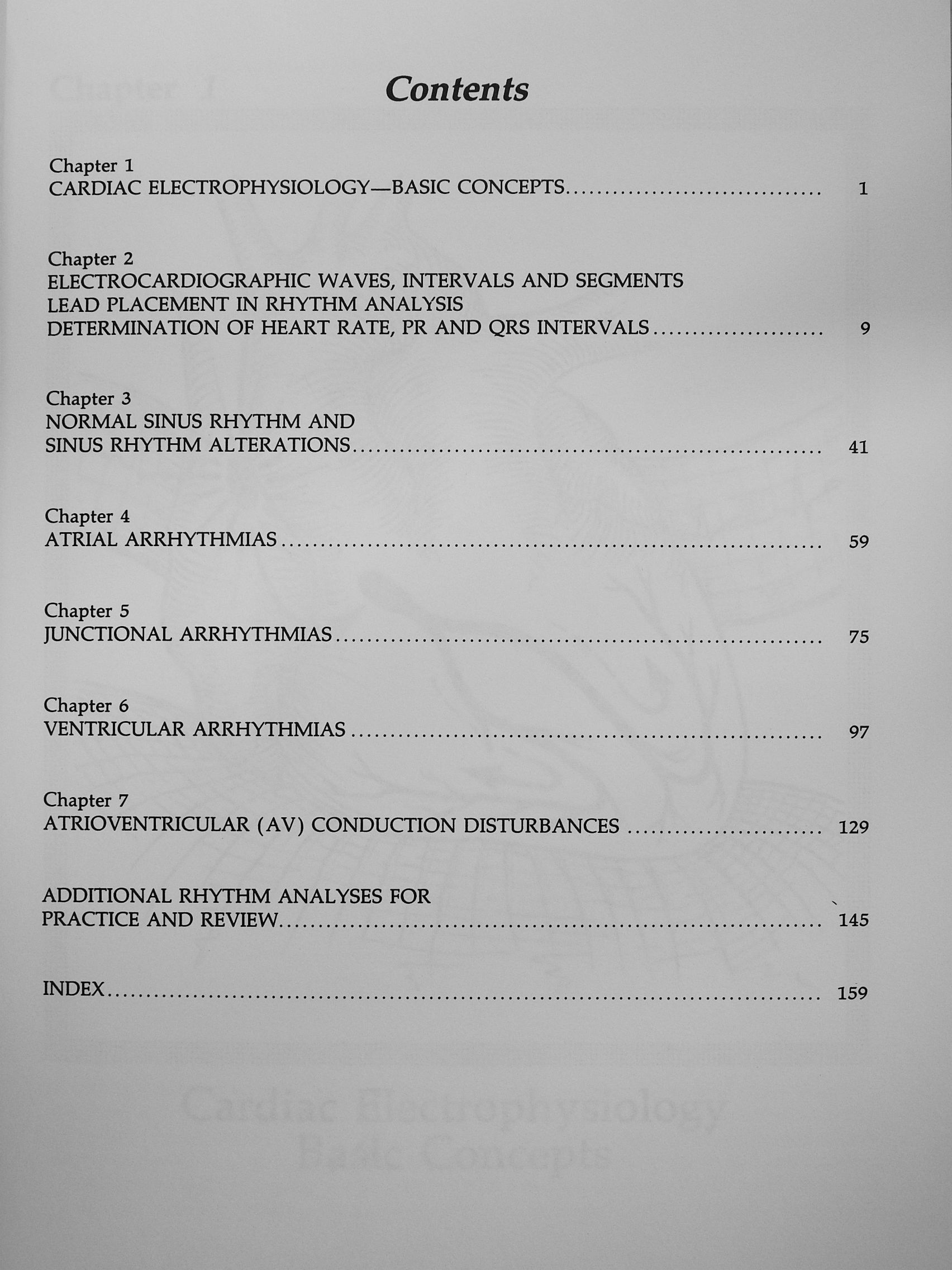
The book is divided into seven chapters. The first two chapters introduce basic cardiac electrophysiology, identification of waves, intervals and segments, determination of heart rate and principal measurements. Normal sinus rhythm and sinus rhythm alterations, atrial, junctional and ventricular arrhythmias, as well as atrioventricular conduction disturbances, are studied in the remaining chapters.
At the end of each of the last five chapters are practice rhythms for analysis related to that chapter. The analyses follow the practice rhythms. At the end of the book is a series of rhythms relating to all the chapters for practice and review. Here, too, the analyses follow the practice rhythms. It is hoped that you will be stimulated to continue learning about arrhythmias and progress to the complete, 12-lead electrocardiogram using the vector approach.^ This will permit you to recognize other abnormal states such as hypertrophy, ventricular repolarization abnormalities, myocardial infarction and intraventricular conduction disturbances.
I have had the opportunity of reaching thousands of people during my decades in medical practice and tens of thousands more through my books and courses. If I have made life and learning easier I shall treasure it as a major accomplishment of my lifetime.
1 thank Mr. R. Kenneth Bussy, Mr. Samuel Rondinelli, Ms. Dorothy DiRienzi, and Ms. Tanya Lazar of Lea & Febiger for their help in making this book possible, and Mr. Thomas Xenakis for elegantly translating my drawings. 1 add my appreciation to Dr. William Fox^ Dr. David B. Propert, and Dr. Donald W. Drew for providing electrocardiograms that have enriched this work.
Norfolk, Virginia
Emanuel Stein, M.D.
' Stein, E.: Clinical Electrocardiography, A Self-Study Course. Philadelphia. Lea &. Febiger. 1987.
'Fox, W. and Stein. E.: Cardiac Rhythm Disturbances, A Step-by-Step Approach, Philadelphia, Lea & Febiger, 1983.
Termékadatok
Cím: Interpretation of Arrhythmias [antikvár]
Szerző:
Emanuel Stein
Kiadó: Lea & Febiger
Kötés: Ragasztott papírkötés
ISBN: 0812111435
Méret: 180 mm x 260 mm
Új vásárló vagyok!
új vásárlóval indíthatsz rendelést............