


kategória
szerző
cím
sorozat
betöltés...
kiadó
betöltés...
ISBN
évszám
ár
-
leírás
Előrendelhető
A mezők bármelyike illeszkedjen
A mezők mind illeszkedjen


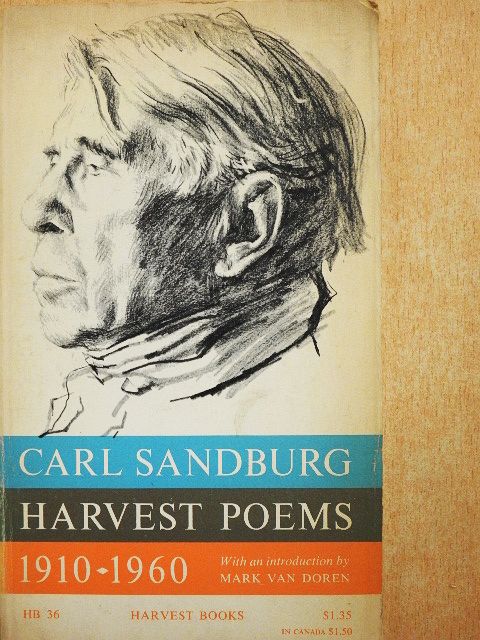

INTRODUCTION BY MARK VAN DOREN
Carl Sandburg, like all of the other American poets who came into prominence with him, brought something back to poetry that had been sadly missing in the early years of this century. It was humor, the indispensable ingredient of art as it is of life. Just as we cannot take a man seriously who lacks the sense of humor, so we cannot take a poet. Humor is the final sign and seal of seriousness, for it is a proof that reality is held in honor and in love. The little poets whom the renaissance of more than forty...
online ár:
Webáruházunkban a termékek mellett feltüntetett fekete színű online ár csak internetes megrendelés esetén érvényes.
2760 Ft

Részletesen erről a termékről
Bővebb ismertető
INTRODUCTION BY MARK VAN DOREN
Carl Sandburg, like all of the other American poets who came into prominence with him, brought something back to poetry that had been sadly missing in the early years of this century. It was humor, the indispensable ingredient of art as it is of life. Just as we cannot take a man seriously who lacks the sense of humor, so we cannot take a poet. Humor is the final sign and seal of seriousness, for it is a proof that reality is held in honor and in love. The little poets whom the renaissance of more than forty years ago swept into oblivion were first of all unreal; their poems were not about anything that matters; and so their feelings—or the ones they said they had—failed to be impressive. They had no genuine subjects.
It is often said of the renaissance in question that the chief thing about it was its discovery of new styles. But this was secondary to the discovery of new subjects, or, rather, of old ones long neglected. Edwin Arlington Robinson restored wit to its empty throne, along with ideas and ironies which narrative helped him state. Edgar Lee Masters in the Spoon River Anthology went all the way back to Greece for the view he would take of men and women in a contemporary village. Vachel Lindsay romped through hells and heavens of his own devising, but he romped. Robert Frost spoke with a living voice of people who lived no less than he; and there was a wryness in this voice, an indirection and an understatement so convincing that his readers scarcely knew what moved them. Ezra Pound rediscovered society as a subject, first in minor ways and then in a way which at least for him was major. T. S. Eliot, witty always, did not rest until he had wrung paradoxes and puzzles out of theology. Wallace Stevens tried his hand at assessing the very form and content—if content—of the modern imagination. The list could be longer, but now here is Carl Sandburg, and what shall be said of the things he discovered?
Once more there are those who would say that the style in his case is the man: the free verse, the long, looping lines that run on like prose and yet are not prose, the commitment to the vernacular, or, as he likes to put it, the lingo of a people. Once more, however, I would say that the first thing with him is his view of the world, which, to be sure, his style frees him to express but which is, above all, there to be expressed. And what is this view? The question is not easy to answer, for his critic
5
Termékadatok
Cím: Harvest Poems [antikvár]
Szerző:
Carl Sandburg
Kiadó: Harcourt
Kötés: Ragasztott papírkötés
ISBN: 0156391252
Méret: 110 mm x 180 mm
Új vásárló vagyok!
új vásárlóval indíthatsz rendelést............