


kategória
szerző
cím
sorozat
betöltés...
kiadó
betöltés...
ISBN
évszám
ár
-
leírás
Előrendelhető
A mezők bármelyike illeszkedjen
A mezők mind illeszkedjen


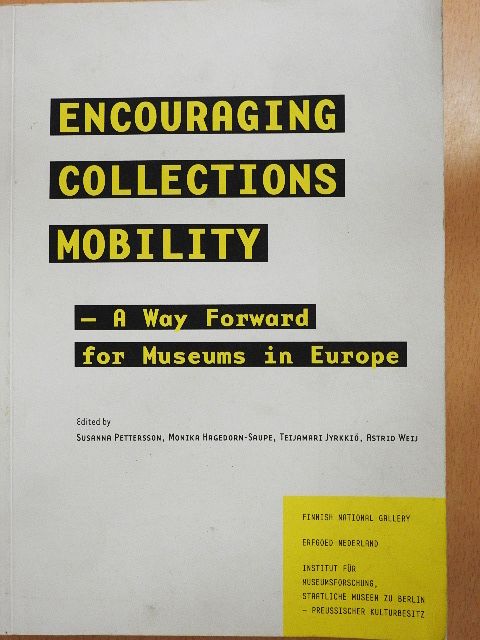
Encouraging Collections Mobility [antikvár]
Freda Matassa, John Carman, Norman Palmer

Manfredo Settala (1600-1680), Milan, was one of the great collectors of 17"' century Europe. He had inherited the Cabinet from his father and continued the work of collecting with growing passion. His Cabinet included objects of every kind: minerals, stuffed animals, horns and skeletons, automata, pressed plants, clocks and weapons etc. The collection became widely known and a growing number of visitors came to see it at Via Pantano.
A catalogue, published in seven volumes, was organised thematically and presented an exact picture of his...
online ár:
Webáruházunkban a termékek mellett feltüntetett fekete színű online ár csak internetes megrendelés esetén érvényes.
6800 Ft

Részletesen erről a termékről
Bővebb ismertető
Manfredo Settala (1600-1680), Milan, was one of the great collectors of 17"' century Europe. He had inherited the Cabinet from his father and continued the work of collecting with growing passion. His Cabinet included objects of every kind: minerals, stuffed animals, horns and skeletons, automata, pressed plants, clocks and weapons etc. The collection became widely known and a growing number of visitors came to see it at Via Pantano.
A catalogue, published in seven volumes, was organised thematically and presented an exact picture of his way of organising knowledge about the universe. Settala commissioned artists to draw and paint pictures of the highlights of the collection. When published in the catalogue, the illustrations enforced the meaning of each object as if creating a scientific aura for them.
A fine line drawing demonstrates how every inch of the four rooms at his residence, including the ceiling, were used to display the collection. In contemporary terms, we would probably talk about an installation: something that cannot be torn down in pieces since every item has its specific place and purpose in the collection.
Patrick Mauries explains in his book Cabinet of Curiosities (2002) that even Settala's funeral celebrated his life as a collector. When he died in i68o, his coffin was followed by a convoy carrying the most curious items from his collection.
The history of collecting is full of stories such as this one: they tell us about dedication and endless curiosity, a need to know more about the world around us. Private collections that are compiled with vision and passion often become part of other collections. Museum history would not be the same without the individual donators who sought to contribute to the building of national or regional collections. In the same way, it would not be the same if public bodies had not wanted to save the lifetime achievements of collectors by purchasing whole collections. This was also the case with Settala, whose collection was later acquired by Bibliotecca Ambrosiona, Milan.
Contemporary collectors, both private and public, continue the saga by joining the line of collectors. The number of items in various collections all over
Termékadatok
Cím: Encouraging Collections Mobility [antikvár]
Kötés: Varrott papírkötés
ISBN: 9789515332868
Méret: 160 mm x 230 mm
Új vásárló vagyok!
új vásárlóval indíthatsz rendelést............