


kategória
szerző
cím
sorozat
betöltés...
kiadó
betöltés...
ISBN
évszám
ár
-
leírás
Előrendelhető
A mezők bármelyike illeszkedjen
A mezők mind illeszkedjen


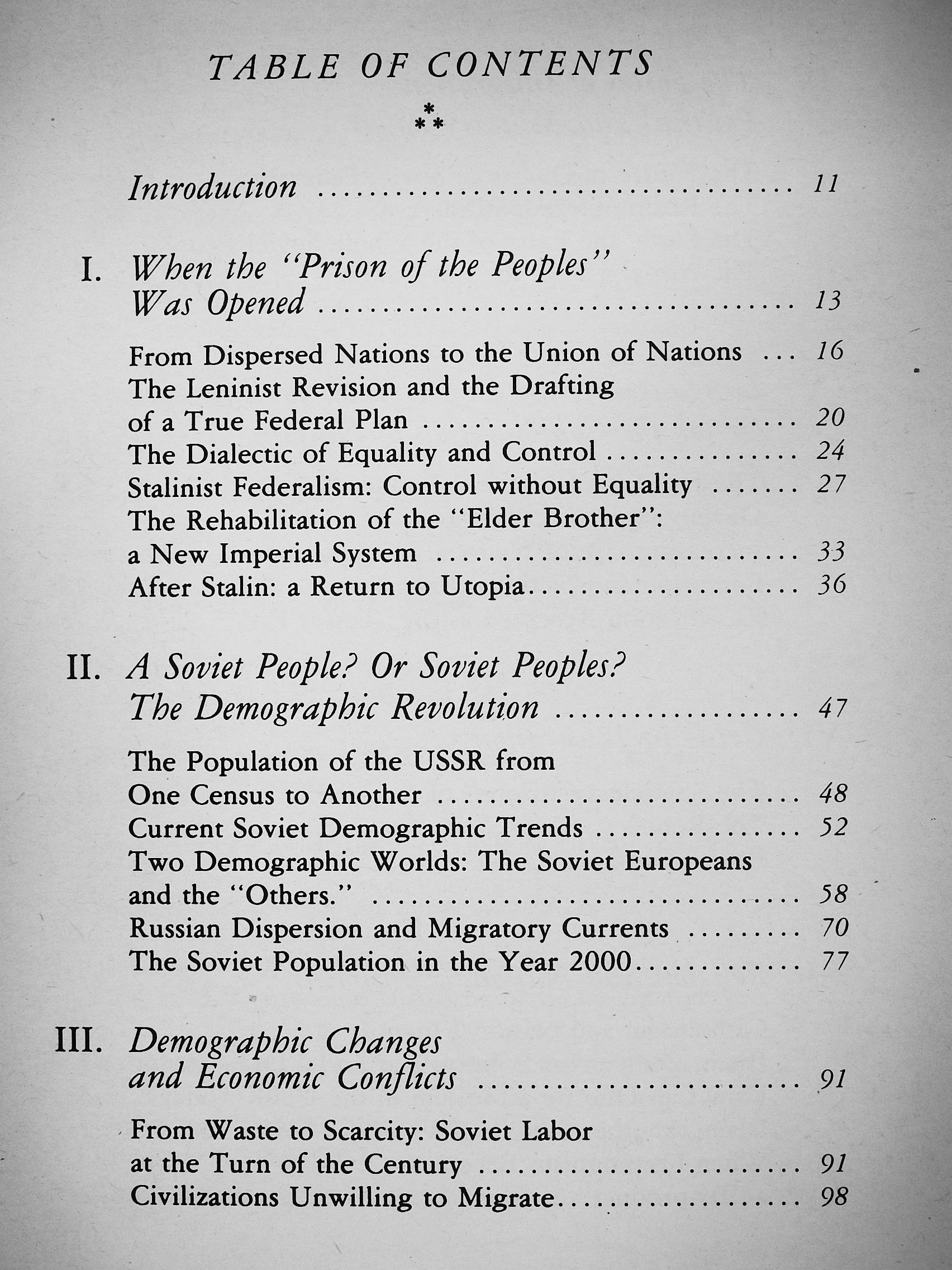

Introduction
The Soviet Union is not a country Hke others, but almost a continent, where Europe and Asia meet. And it is not a nation SO much as an empire, in a world where empires are fading away. In short, it is not the "State of workers and peasants" it claims to be. The truth is that it is primarily a State of nations.
More than a hundred nations and nationalities lie within its borders, Speaking more than a hundred languages, with all that keeps them apart: history, race, traditions, religions. The Soviets are in fact a highly...
online ár:
Webáruházunkban a termékek mellett feltüntetett fekete színű online ár csak internetes megrendelés esetén érvényes.
3980 Ft

Részletesen erről a termékről
Bővebb ismertető
Introduction
The Soviet Union is not a country Hke others, but almost a continent, where Europe and Asia meet. And it is not a nation SO much as an empire, in a world where empires are fading away. In short, it is not the "State of workers and peasants" it claims to be. The truth is that it is primarily a State of nations.
More than a hundred nations and nationalities lie within its borders, Speaking more than a hundred languages, with all that keeps them apart: history, race, traditions, religions. The Soviets are in fact a highly diversified people, a mixture of human beings totally dissimilar, both physically and culturally. There are the Baits on the borders of Europe, the Uighurs on the borders of China, and the Russians in between who have undergone the opposing influences of both; there are the Georgians of the south, the Eskimos of the far north, the nomads of the Kazakhian steppes, and innumerable others. A tormented history, comprising invasions, wars, and patient re-conquests over the centuries has fashioned this indefinable mass of completely different peoples. One has only to look at the map to comprehend this. In this boundless continent open on every side conquerors have been engulfed and some, like Tamerlane, have made it their final resting place, leaving there their customs, religions and ideas.
Today the descendants of the conquerors and the conquered live side by side. All, according to their passports, are Soviet citizens, children of the Workers' Revolution of 1917. How well has a state, born of a revolution of the working classes and bearer of an ideolo-
11
Termékadatok
Cím: Decline of an Empire [antikvár]
Szerző:
Héléne Carrére d'Encausse
Kiadó: Harper & Row
Kötés: Ragasztott papírkötés
ISBN: 0060908440
Méret: 130 mm x 200 mm
Új vásárló vagyok!
új vásárlóval indíthatsz rendelést............