


kategória
szerző
cím
sorozat
betöltés...
kiadó
betöltés...
ISBN
évszám
ár
-
leírás
Előrendelhető
A mezők bármelyike illeszkedjen
A mezők mind illeszkedjen


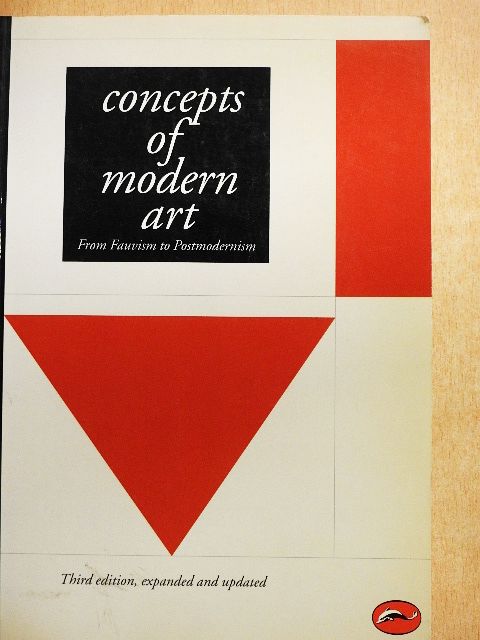
Concepts of Modern Art [antikvár]
Christopher Green, John Golding, Norbert Lynton, Sarah Whitfield, Virginia Spate

Preface
it is therefore necessary to develop a counter-discourse in relation to contemporary art practice and theories of representation. The full significance of pairUing in the twentieth century will not emerge before such a counter-discourse is adopted. I would suggest that at least six substantive issues need to be addressed. Firstly, it is necessary to break once and for all with a chronological 'movements' based approach to twentieth-century painting. The teleological legacy of positivism can never be overcome while its historical...
online ár:
Webáruházunkban a termékek mellett feltüntetett fekete színű online ár csak internetes megrendelés esetén érvényes.
5240 Ft

Részletesen erről a termékről
Bővebb ismertető
Preface
it is therefore necessary to develop a counter-discourse in relation to contemporary art practice and theories of representation. The full significance of pairUing in the twentieth century will not emerge before such a counter-discourse is adopted. I would suggest that at least six substantive issues need to be addressed. Firstly, it is necessary to break once and for all with a chronological 'movements' based approach to twentieth-century painting. The teleological legacy of positivism can never be overcome while its historical forms and procedures remain fetishized. Secondly, we need to understand the complex symbolic role of the 'artist' as it has been constructed since the eighteenth century, not simply as a sub-species of the specialist-professional, but as a distinct type of person, someone who supposedly gives access to the 'truth' of our 'nature', the measure of individualist identity at its most extreme. Thirdly, we need to know far more about the regulation and de-regulation of sexuality and sexual fantasy in patriarchal societies. In this sense modernism appears as a site of perpetual struggle between shifting definitions of the licit and the illicit, the representable and the unrepresentable. Fourthly, we need to understand the ways in which different art historical apparatuses construct regimes of images in the name of national, racial and gender characteristics. How, in other words, does modernism articulate some social differences while it overrides others? Fifthly, we need to question the rigid hierarchy of signifying practices which is constituted within the curriculum of modernist studies, just as in an earlier age it was necessary to question the hierarchy of genres. A nd lastly, we need to dramatically problematize the entire modernist separation of the verbal from the visual, together with that picture of human consciousness which such a separation presupposes. None of this work can however proceed until art historians are prepared to think a lot harder about the nature and effects of ideology, which is the sine qua non for any progressive contemporary work in representational studies.^
In tiie twenty years since this book was first pubhshed in its original form (subsequently updated), a number of transforming developments have taken place in our awareness and understanding about the ways we look at art, think and write about it. My brief introductory comments in the original and subsequent editions seem to me now at such variance from my present understanding, that I would probably have to concede that the title of this book is a misnomer in that I must now question the words 'concepts' and 'modern art' as at best vague, at worst misleading or confused. Although my original opening sentence that the purpose of this book is to present to the general reader the main
Termékadatok
Cím: Concepts of Modern Art [antikvár]
Kiadó: Thames and Hudson
Kötés: Ragasztott papírkötés
ISBN: 0500202680
Méret: 150 mm x 210 mm
Új vásárló vagyok!
új vásárlóval indíthatsz rendelést............