


kategória
szerző
cím
sorozat
betöltés...
kiadó
betöltés...
ISBN
évszám
ár
-
leírás
Előrendelhető
A mezők bármelyike illeszkedjen
A mezők mind illeszkedjen


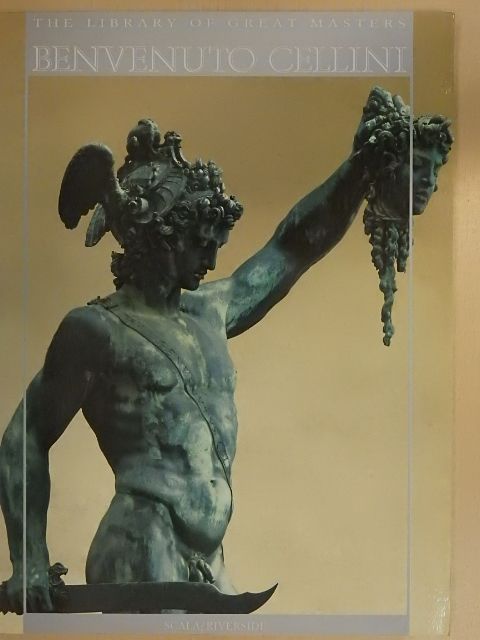

Benvenuto Cellini's fame and acclaim is largeiy related to the great bronzé sculpture in Piazza della Signoria in Fiorence. In fact the Perseus met with "extraordinary praise", as contemporary sources relate. It was a product of the sculptor's artistic maturity and was deliberately intended to be his masterpiece. Impetuous, quarrelsome and proud. Cellini was not particularly liked by his fellows. not even by those who most appreciated him as an artist and commissioned him to execute works of greater or lesser importance. In his autobiography...
online ár:
Webáruházunkban a termékek mellett feltüntetett fekete színű online ár csak internetes megrendelés esetén érvényes.
3980 Ft

Részletesen erről a termékről
Bővebb ismertető
Benvenuto Cellini's fame and acclaim is largeiy related to the great bronzé sculpture in Piazza della Signoria in Fiorence. In fact the Perseus met with "extraordinary praise", as contemporary sources relate. It was a product of the sculptor's artistic maturity and was deliberately intended to be his masterpiece. Impetuous, quarrelsome and proud. Cellini was not particularly liked by his fellows. not even by those who most appreciated him as an artist and commissioned him to execute works of greater or lesser importance. In his autobiography he continually infers that he was treated with hostility even at the Medici court of Cosimo, the first Grand Duke of Tuscany, son of the great condottiere Giovanni dalle Bande Nere and relation of Duke Alessandro whom he had served so faithfully. Yet despite the quarrels over money and the seesaw of relationships that these provoked. Cellini's patrons continued to support him, maintaining their faith in him even when the artist wished to embark on tasks that initially seemed beyond his abilities. The fact is that the story of Benvenuto Cellini is emblematic of a situation that was common to many of the artists working in the Cinquecento. Until the previous century the Florentine painting, sculpture and goldsmithery workshops had turnéd out artists who could work in various materials and alsó draw up designs on paper: Brunelleschi, Ghiberti, Donatello, Michelozzo and Leonardo himself had shown great versatility without feeling constrained by their early workshop experience, which for somé of them had involved drawing and then goldsmithery before proceeding to clay and wood. Rather than change their actual approach, they had simply altered the scale of what they were creating. In practical terms, it was customary for the young workshop apprentices to learn first of all how to put their thoughts down on paper. Such graphic ability was then further developed by engraving precious metals with a burin and shaping small items in preparation for more important and complex commissions. Even architecture was learnt at the goldsmith's workbench; only later did the student move on to classical treatises such as that of Vitruvius or modern dissertations like the one drawn up by Leon Battista Alberti, it is thus hardly surprising that Cellini's cursus honorum, that is his creative activity, should have begun with smallish works that followed in the wake of generations of artists who started out as goldsmiths. Benvenuto was born on All Saints Day in the year 1500, an apparently 'fatal' date, as he liked to underline in his autobiography. That his family was artistic
Termékadatok
Cím: Benvenuto Cellini [antikvár]
Szerző:
Mario Scalini
Kiadó: Scala/Riverside
Kötés: Varrott papírkötés
ISBN: 1878351508
Méret: 210 mm x 280 mm
Új vásárló vagyok!
új vásárlóval indíthatsz rendelést............