


kategória
szerző
cím
sorozat
betöltés...
kiadó
betöltés...
ISBN
évszám
ár
-
leírás
Előrendelhető
A mezők bármelyike illeszkedjen
A mezők mind illeszkedjen



Introduction
It is customary to speak of "Baroque" and -Rococo" and to attempt to comprehend and differentiate between historical periods of art by means of terms such as "Gothic" or "Renaissance." The art of the nineteenth century, on the other hand, is generally considered within its chronological limits.
It is clear, however, that the strict chronological definition of the century is little more than a purely convenient arrangement. In order to provide a meaningful unity, almost all historical books and documents take a stage in the...
online ár:
Webáruházunkban a termékek mellett feltüntetett fekete színű online ár csak internetes megrendelés esetén érvényes.
5540 Ft

Részletesen erről a termékről
Bővebb ismertető
Introduction
It is customary to speak of "Baroque" and -Rococo" and to attempt to comprehend and differentiate between historical periods of art by means of terms such as "Gothic" or "Renaissance." The art of the nineteenth century, on the other hand, is generally considered within its chronological limits.
It is clear, however, that the strict chronological definition of the century is little more than a purely convenient arrangement. In order to provide a meaningful unity, almost all historical books and documents take a stage in the eighteenth century as their starting point. Even here, the dividing line is uncertain and is situated at many different times, but generally in connection with the French Revolution of 1789. At its outbreak, this was directed against the power of the nobles under the ancien régime, and against the Baroque nature of contemporary social structure with its religious basis—although it was from these very factors that the Revolution derived its vigor. Together with the Industrial Revolution, it introduced a structural change into Europe which sparked off developments in the state, society, economics, and law which, in turn, prepared the ground for the social evolution of the nineteenth century. It destroyed the European system of nation states that was only partially reconstructed later at the time of the Bourbon Restoration.
Fritz Novotny, in his Painting and Sculpture in Europe: 1780-1880, takes as his starting point the year in which Immanuel Kant completed his Critique of Pure Reason. Against this revolutionary event which evolved from Baroque philosophy, Novotny sets Paul Cézanne's new paintings of 1880, which marked the beginning of modern painting. K. Lankheit, in his Revolution und Restauration, attempts to give some idea of the revolutionary events of this age by quoting a text written by Johann Wolfgang von Goethe on October 5, 1786; "During this journey I wish to bring peace to my mind through art and its beauty, to impress its holy image right into my very soul and to guard it there for quiet enjoyment. Then, however, I will turn my attention to the work of the artisan and, on my return, take up the study of Chemistry and Mathematics. For the time of the beautiful is past; our age is the age of need and harsh necessity."
Novotny, in his discussion of art, calls this period "The Century of Naturahsm," although he acknowledges the existence of contrary forces: "Never before had there been such a degree of Naturalism in painting, not even in Holland in the seventeenth century. To use 'closeness to nature' rather than Naturalism may be a little precise, but it is a more fitting description of the basic trend of nineteenth-century art. For the painting of this century was 'naturalistic' only now and again—for example, during Impressionism everywhere in Europe; but it kept close to nature even when it pursued programmes in opposition to Naturalism, such as those of Classicism and Romanticism. The element logically opposed to Naturalism, to the representation of the visible, was Idealism, that painting of ideas which occurs in many forms in the art of the nineteenth century. This Idealism, however, when it appeared in direct opposition to Naturalism, hardly ever had the same artistic strength."
In his Abendländische Kunst (Art of the Western World). Kurt Bauch gives his interpretation of post-Baroque art the heading of "Liberal Art," and places his studies in a historical setting which extends beyond the confines of art proper: "In this world of practical life, art has acquired a novel and special place. It lifts
Termékadatok
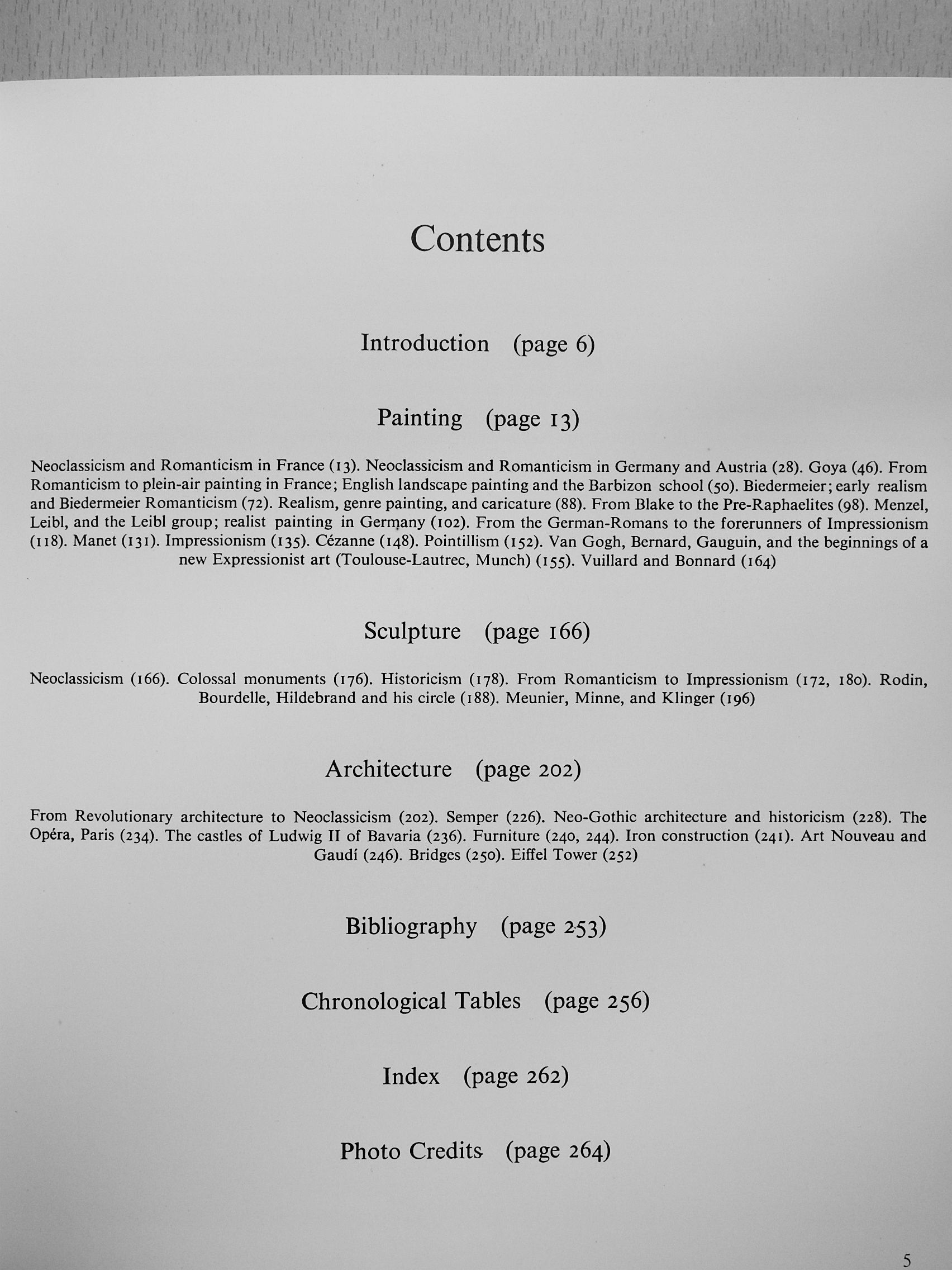
Cím: Art of Nineteenth-Century Europe [antikvár]
Szerző:
Jürgen Schultze
Kiadó: Harry N. Abrams
Kötés: Vászon
Méret: 200 mm x 230 mm
Új vásárló vagyok!
új vásárlóval indíthatsz rendelést............