


kategória
szerző
cím
sorozat
betöltés...
kiadó
betöltés...
ISBN
évszám
ár
-
leírás
Előrendelhető
A mezők bármelyike illeszkedjen
A mezők mind illeszkedjen



PART ONE:
FORM AND CONTENT OF AFRICAN ART
TEXT BY MARGARET TROWELL
the geographical conditions
Africa is a continent of violent contrasts, cruel yet always beautiful. From the west a belt of tropical rain forest stretches eastward along the Guinea coast and over part of the Cameroons, while farther south it covers the Gabon and northern half of the Congo. This forest is surrounded on the north, east, and south by parklike savanna fading into arid steppe and finally into complete desert in the Sahara to the north and the Kalahari to the...
online ár:
Webáruházunkban a termékek mellett feltüntetett fekete színű online ár csak internetes megrendelés esetén érvényes.
4840 Ft

Részletesen erről a termékről
Bővebb ismertető
PART ONE:
FORM AND CONTENT OF AFRICAN ART
TEXT BY MARGARET TROWELL
the geographical conditions
Africa is a continent of violent contrasts, cruel yet always beautiful. From the west a belt of tropical rain forest stretches eastward along the Guinea coast and over part of the Cameroons, while farther south it covers the Gabon and northern half of the Congo. This forest is surrounded on the north, east, and south by parklike savanna fading into arid steppe and finally into complete desert in the Sahara to the north and the Kalahari to the far southwest. An area of moderately high rainfall runs down the east coast, the Nile Valley is intensively cultivated owing to its annual flooding, and the temperate conditions of the Mediterranean coast are echoed in the extreme south.
Water has always been a controlling factor as far as human settlement is concerned; for in complete desert and much of the dry steppe, man could not exist permanently, and in the denser parts of the tropical forest life was only possible in scattered clearings where small isolated groups struggled against prolific vegetation and insect-borne disease in order to eke out a primitive existence.
It is in the vast area of assured rainfall channeled by the Congo and Niger river systems that a purely African art of such consistent sculptural quality as to compel the respect of artists and connoisseurs throughout the world is to be found. To the north and along the east coast, Moslem influence has been too strong to allow the development of an African art form; while to the south, sculptural tradition hardly exists although the carving of stools, and food and milk vessels is proficient. The sculpture-producing tribes are both Negro and Bantu-speaking, and various admixtures of the two. They are chiefly agriculturalists practicing, until comparatively recently at least, the old type of agriculture, clearing their way with fire, digging sticks, and wooden hoes ever deeper into the forest, as they wore out patch after patch of worn-out cultivation. Weaker, less developed tribes had been driven further into undesirable terrain. Pygmy food-gatherers and hunters with their bows and arrows crept through almost impenetrable jungle; the bushmen went south toward the Kalahari Desert, and other more primitive people in the Western Sudan sought protection by building their huts on rocky inaccessible cliffs.
Behind the agricultural settlers came the pastoral tribes, largely Hamitic. These people, certainly no less intelligent than the agriculturalists over whom they usually claimed overlordship, preferred the nomadic life, leading their cattle seasonally from one area to another in search of water. Such a life did not encourage the accumulation of material possessions, and sculpture is not found among them.
An African people in migration sought a country richer than that from which they had come, an environment in which their particular way of life might be fully developed, whether it was agricultural, mixed farming, or purely pastoral. Having once settled, they were completely dependent on their environment not only for food but also for all the materials they needed for building, clothing, and all other necessities. Fertile soil and sufficient water supply were the first requisites, then the wherewithal to build.
Termékadatok
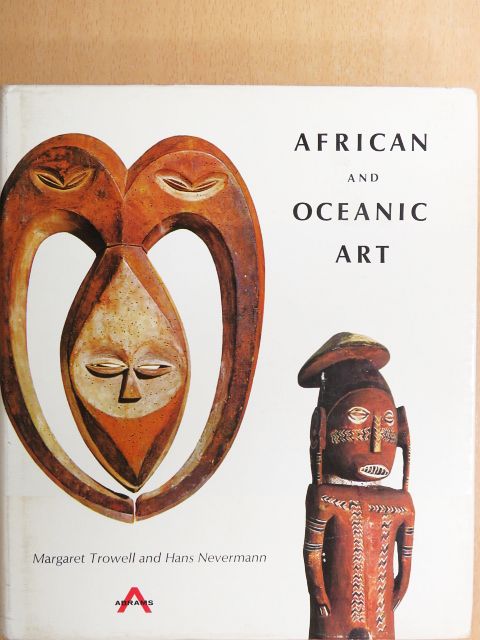
Cím: African and Oceanic Art [antikvár]
Kiadó: Harry N. Abrams
Kötés: Vászon
Méret: 200 mm x 230 mm
Új vásárló vagyok!
új vásárlóval indíthatsz rendelést............