


kategória
szerző
cím
sorozat
betöltés...
kiadó
betöltés...
ISBN
évszám
ár
-
leírás
Előrendelhető
A mezők bármelyike illeszkedjen
A mezők mind illeszkedjen


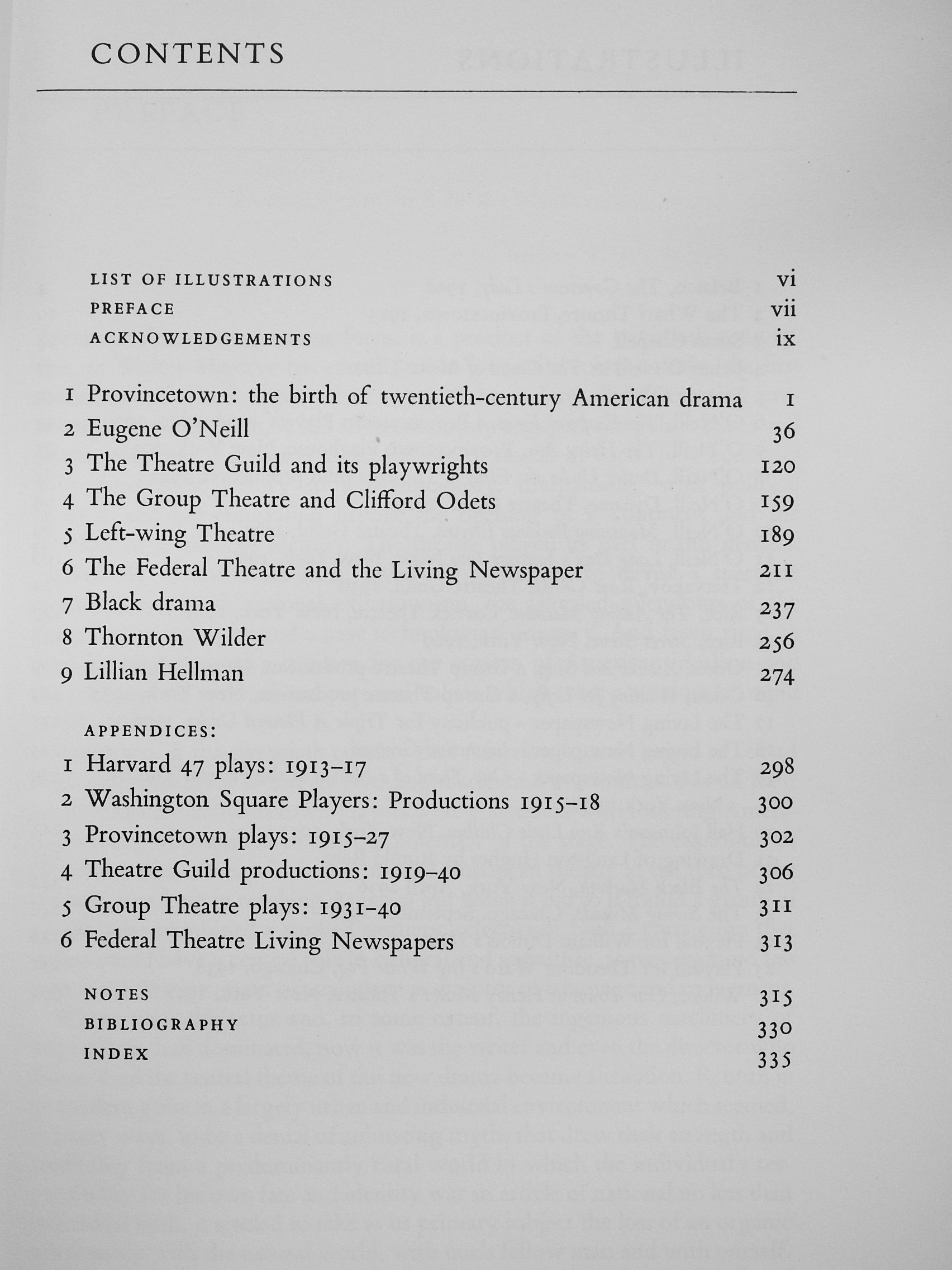
A critical introduction to twentieth-century American drama 1 [antikvár]
C. W. E. Bigsby

PREFACE
American drama, as a serious form, is a product of the twentieth century. But, as Walter Meserve has established in his multi-volume study (the first instalment of which appeared in 1977), it has a long and fascinating prehistory. A public form, it has self-consciously engaged the public issues and private tensions of a nation and a culture in search of itself Few countries have lived their history so self-consciously, dramatising, with political rhetoric and fast-congealing myths, the opening of a continent and the creation of a...
online ár:
Webáruházunkban a termékek mellett feltüntetett fekete színű online ár csak internetes megrendelés esetén érvényes.
5540 Ft

Részletesen erről a termékről
Bővebb ismertető
PREFACE
American drama, as a serious form, is a product of the twentieth century. But, as Walter Meserve has established in his multi-volume study (the first instalment of which appeared in 1977), it has a long and fascinating prehistory. A public form, it has self-consciously engaged the public issues and private tensions of a nation and a culture in search of itself Few countries have lived their history so self-consciously, dramatising, with political rhetoric and fast-congealing myths, the opening of a continent and the creation of a nadonal identity. The theatre played its part in this process. Particularly in the nineteenth century it attempted to devise a spectacle commensurate with national expansionism, the revealed splendours of the American topography and a new teclinological mastery. And from time to time it also expressed a concern for the erosion of American idealism and the pressures on national and personal values which were a product of rapid social process.
But it was in the twentieth century that American drama began to attend to its own processes, to test its own boundaries and possibilities. For all their amateurism the Provincetown Players were concerned with fostering American writers who wished to test the potential of the stage. The explosion of experimental theatre, which had marked European theatre at the turn of the century, was long in reaching America but when it did so it found a group of people who combined a studied aesthetic eclecticism with a conviction that drama could have a central role in cultural and social life, as paradigm no less than as subtle instrument of analysis or as sculptor of language and movement.
Where once the actor and, to some extent, the ingenious machinery of stage effects, had dominated, now it was the writer and even the director who did so. And the central theme of this new drama becanie alienation. Reborn in its modern guise in a largely urban and industrial environment which seemed, in many ways, to be a denial of animating myths that drew their strength and credibility from a predominantly rural world in which the individual's responsibility for his own fate and identity was an article of national no less than individual faith, it tended to take as its primary subject the loss of an organic relationship with the natural world, with one's fellow man and with oneself
The dominant image was of the loss of space: physical, emotional and moral. In so far as American idealism had been consciously rooted in the fact of American space, romantic notions of the moralising impact of nature, political convictions about the democratising effect of the frontier and the
Termékadatok
Cím: A critical introduction to twentieth-century American drama 1 [antikvár]
Szerző:
C. W. E. Bigsby
Kiadó: Cambridge University Press
Kötés: Varrott papírkötés
ISBN: 0521242274
Méret: 150 mm x 230 mm
Új vásárló vagyok!
új vásárlóval indíthatsz rendelést............