


kategória
szerző
cím
sorozat
betöltés...
kiadó
betöltés...
ISBN
évszám
ár
-
leírás
Előrendelhető
A mezők bármelyike illeszkedjen
A mezők mind illeszkedjen


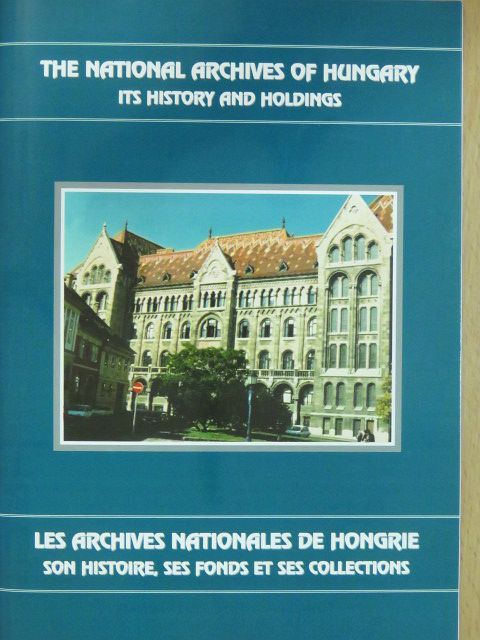

The early history of the National ArchivesThe beginnings of the National Archives of Hungary go back to the MiddleAges. The royal archives developed gradually during the reign of the kings of theÁrpád Dynasty from the end of the 12th century. Its documents perished or gotscattered in the 16th century when the Ottoman Empire occupied the larger partof Hungary and the country was divided into three parts (the so-called RoyalHungary under Habsburg rule, the Transylvanian Principality, and the landsunder Ottoman rule). The government offices of...
online ár:
Webáruházunkban a termékek mellett feltüntetett fekete színű online ár csak internetes megrendelés esetén érvényes.
1940 Ft

Részletesen erről a termékről
Bővebb ismertető
The early history of the National ArchivesThe beginnings of the National Archives of Hungary go back to the MiddleAges. The royal archives developed gradually during the reign of the kings of theÁrpád Dynasty from the end of the 12th century. Its documents perished or gotscattered in the 16th century when the Ottoman Empire occupied the larger partof Hungary and the country was divided into three parts (the so-called RoyalHungary under Habsburg rule, the Transylvanian Principality, and the landsunder Ottoman rule). The government offices of the Habsburg royal house inVienna kept their own records in the same way as the main offices working inRoyal Hungary. Following their example, the Diet endeavoured to keep in asecure place the documents that were important for the country and whichproved the rights of the estates. This trend was strengthened after the expulsionof the Turks at the end of the 17th century and led to act no. 45 of the year1723, which ordered that the public documents of the country (publica regni acta)should be placed in the Archives of the Country (archívum regni). Although placeof the future institution had been designated in the Parliament building inPozsony (now Bratislava), the capital of the country at the time of the passing ofthe act, decades passed before the archives could start working in 1756. Itsrealisation required the persistent organising activity of count Lajos Batthyánywho filled the rank of the palatine (the highest office after the king) between1751 and 1765. Following his appeals, the documents were gradually handed in;soon reaching a number that necessitated their ordering and cataloguing. Finally,the palatine offered two rooms for the archives in the originally designatedbuilding. This is how the National Archives came into being 33 years after thepassing of the act ordering its foundation and seven years after the foundationof the Haus-, Hof- und Staatsarchiv in Vienna. This institution was latergenerally known as the "old National Archives", the structure of which wasfinally accepted in 1765. In 1784-1785 the institution moved to Buda, thecapital.The "old National Archives" served first of all the Diet and the palatine.Its responsibility did not include the documents of the royal government offices(the Chancellery, the Council of the governor-general, the Chamber). Its firstand main task was receiving, preserving and cataloguing the documents. TheDiet and the palatine regularly sent their documents to the archives, privatepersons and families more occasionally. The systématisation of the archivalmaterial and the preparation of finding aids were the main tasks of the staff.Detailed lists and indexes to the various units were made which are still ofservice today. Beside the strictly archival work, many management tasks fell to
Termékadatok
Cím: The National Archives of Hungary [antikvár]
Kiadó: Magyar Országos Levéltár
Kötés: Tűzött kötés
Méret: 150 mm x 210 mm
Új vásárló vagyok!
új vásárlóval indíthatsz rendelést............