


kategória
szerző
cím
sorozat
betöltés...
kiadó
betöltés...
ISBN
évszám
ár
-
leírás
Előrendelhető
A mezők bármelyike illeszkedjen
A mezők mind illeszkedjen


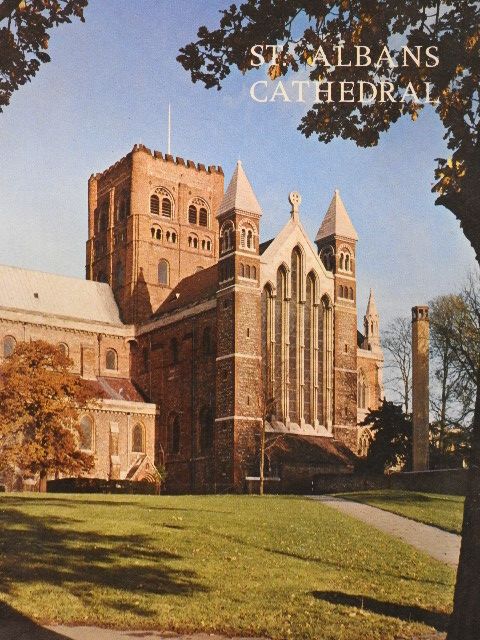

ST. ALBANS CATHEDRAL
D. R. FEAVER
A CHURCH from about 300 A.D., an abbey from 793 to 1539, a cathedral from 1877, but still known locally as The Abbey, the Cathedral and Abbey Church of St. Alban stands on a hill overlooking the site of the once famous Roman city of Verulamium. It marks the place where the first man in this island to die for the Christian Faith was martyred. He was a Roman soldier, called Alban, stationed in Verulamium. He died, most probably, some time between 303* and 305 in the last years of the reign of the Emperor...
online ár:
Webáruházunkban a termékek mellett feltüntetett fekete színű online ár csak internetes megrendelés esetén érvényes.
1980 Ft

Részletesen erről a termékről
Bővebb ismertető
ST. ALBANS CATHEDRAL
D. R. FEAVER
A CHURCH from about 300 A.D., an abbey from 793 to 1539, a cathedral from 1877, but still known locally as The Abbey, the Cathedral and Abbey Church of St. Alban stands on a hill overlooking the site of the once famous Roman city of Verulamium. It marks the place where the first man in this island to die for the Christian Faith was martyred. He was a Roman soldier, called Alban, stationed in Verulamium. He died, most probably, some time between 303* and 305 in the last years of the reign of the Emperor Diocletian, who promulgated two edicts against the Christians in 303.
The story of Alban's martyrdom runs as follows. During a persecution of the Christians he, a pagan, gave shelter to a fugitive Christian priest, and was by him baptized. When the soldiers came to Alban's house, he changed clothes with his guest, and was taken by the soldiers to the magistrate who was in the act of sacrificing to idols. Alban was questioned about his new-found beliefs. "I am called Alban," he replied, "and I worship and adore the true and living God who created all things." He was condemned to death as a dog unfit to live; and was taken out of the town, across the river, and up onto the hill where his church now stands, and there he was beheaded.
These seem to be the bare facts. By the time the Abbey chronicler, Matthew Paris, wrote them up in the middle of the thirteenth century, they had attracted to themselves many embellishments. The shadowy priest.
ABOVE, right: A representation of St. Matthew in the west porch. The features are Lord Grimthorpe's, the nineteenth-century restorer of the Abbey.
* Later research, still continuing, indicates that the martyrdom was in 209 A.D., earlier than the Diocletian reign.
to whom Alban gave shelter, is given a name, Amphibalus. The heavens are filled with wondrous signs, and the headsman who killed Alban is smitten down, and then restored to life by touching the saint's body. Bede's account in his Ecclesiastical History, upon which Matthew Paris relies, was written about 730. It includes one or two modest miracles, and is particularly important in that it indicates that in Bede's own day the site of Alban's martyrdom was well known, and that there was a church on the spot, which was famous for works of healing.
Venantius Fortunatus, Bishop of Poitiers {circa 600) wrote many well known hymns. Among them are "The royal banners forward go", and "Sing, my tongue, the glorious battle". He also wrote a long poem in praise of Virginity, in which he lists famous martyrs, St. Cyprian, St. Vincent and
St. Victor, and, with them, St. Alban in the line;
"Egregium Albanum fecunda Britannia profért" which may be translated,
"First of the noble host in Britain's land (Mother of Saints) see glorious Alban stand."
St. Germanus, Bishop of Auxerre, in the early fifth century dedicated one of his churches in honour of St. Alban. One account of the Life of St. Germanus mentions a pilgrimage which he made to Britain when he visited St, Alban's grave and deposited relics in it. There seems to be no reason to doubt Gildas when he wrote that after the persecutions British Christians were careful to build churches in honour of their martyred brethren, Gildas wrote about 550; and it may be that his account of Alban's martyrdom, conjoined with
Termékadatok
Cím: St. Albans Cathedral [antikvár]
Szerző:
D. R. Feaver
Kiadó: Pitkin Pictorials Ltd.
Kötés: Tűzött kötés
Méret: 180 mm x 230 mm
Új vásárló vagyok!
új vásárlóval indíthatsz rendelést............