


kategória
szerző
cím
sorozat
betöltés...
kiadó
betöltés...
ISBN
évszám
ár
-
leírás
Előrendelhető
A mezők bármelyike illeszkedjen
A mezők mind illeszkedjen


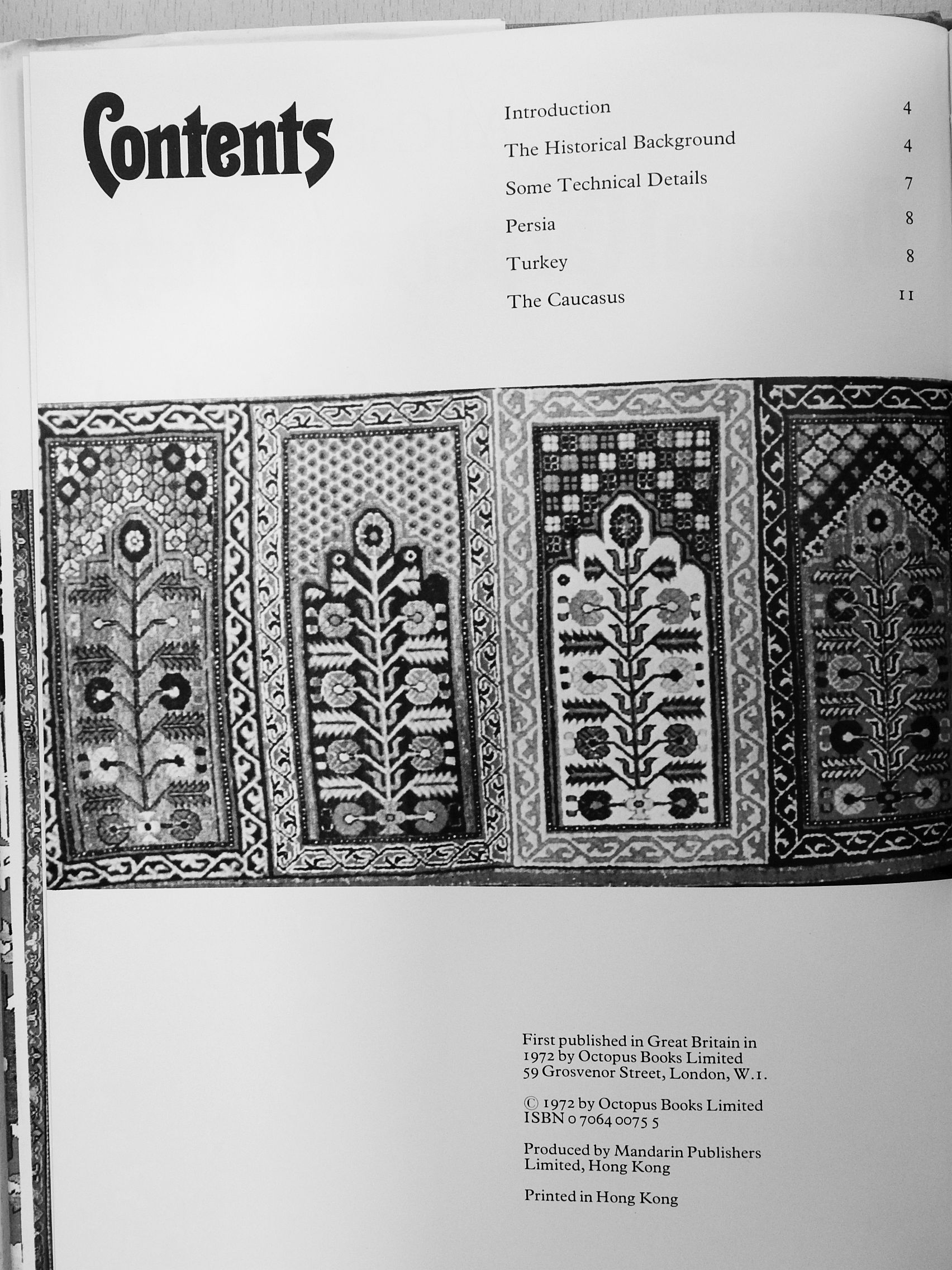

0 I
Shirodttction
This is a subject which knows no beginning and no end. No beginning, because until a few years ago no proof whatever existed that what we know^ as Oriental rugs and carpets could have been produced prior to the Christian era, and no end, because such products are still being made today in the same way as in those far off days. Before delving into the historical and technical details of this fascinating subject, it is necessary to define exacdy what is meant by an Oriental rug, or carpet. It is true that machine-made...
online ár:
Webáruházunkban a termékek mellett feltüntetett fekete színű online ár csak internetes megrendelés esetén érvényes.
5540 Ft

Részletesen erről a termékről
Bővebb ismertető
0 I
Shirodttction
This is a subject which knows no beginning and no end. No beginning, because until a few years ago no proof whatever existed that what we know^ as Oriental rugs and carpets could have been produced prior to the Christian era, and no end, because such products are still being made today in the same way as in those far off days. Before delving into the historical and technical details of this fascinating subject, it is necessary to define exacdy what is meant by an Oriental rug, or carpet. It is true that machine-made carpets and rugs are now manufactured in some parts of the East, particularly Japan, but the definition we are seeking is of a hand-made, knotted product, made in any of the traditional areas between Turkey and China. Some licence must be given, however, to include certain aspects of Balkan production, the early carpets of Egypt, and passing mention of Spain. Also included are the pileless fabrics used as hangings, divan covers or floor coverings, and known by various names, but most popularly as Kelims.
It is also necessary to define what is meant by 'rug' and 'carpet'. Throughout this book the English version of these terms will be used. That is, a rug is any piece smaller than 9ft. x 6ft. From this size upwards the term 'carpet' will be used. There are two exceptions to this rule. A long and narrow piece is a runner, and a carpet of size 12ft. X 6ft. or larger, but in that proportion, is a Kelleye. The reason for this explanation is that in America the term 'scatter rug' is used for small pieces, 'rug' is used for large ones, and carpets refer to machine-made fitted carpeting with which we are not concerned.
The Historical Background
In view of the comparatively recent discovery of a rug dating fr6m the fifth century BC (now known as the Pazyryk rug), in the wild and mountainous region of Gorny-Altai, it is now believed that the first hand-knotted carpets ever to be woven were made in Persia. Time alone will tell if this is true or not, when some future expedition uncovers more of the treasures of the Old World.
From this time onwards we are left with no actual examples, apart from some fourth century textiles from Egypt, which, although with a form of pile, are not to be classed with the true product, until the thirteenth century-these latter pieces being of Turkish origin. They were taken from the Mosque of Ala-ad-Din in Konia, and are now in the Museum of Islamic Art, in Istanbul. Even here the dating is doubtful.
Termékadatok
Cím: All Colour Book of Oriental Carpets and Rugs [antikvár]
Szerző:
Stanley Reed
Kiadó: Octopus Books Ltd.
Kötés: Varrott keménykötés
ISBN: 0706400755
Méret: 220 mm x 290 mm
Új vásárló vagyok!
új vásárlóval indíthatsz rendelést............