


kategória
szerző
cím
sorozat
betöltés...
kiadó
betöltés...
ISBN
évszám
ár
-
leírás
Előrendelhető
A mezők bármelyike illeszkedjen
A mezők mind illeszkedjen


The Connoisseur Vol. XVI. 1906 [antikvár]
A. J. Rusconi, Leonard Willoughby, M. Jourdain, Meredyth A. Burke, William White

September, 190Ő.COLLECTIONS VI5ITEDThe Dickins Collection of PorcelainBy "Virtuoso"Mr. C. J. Dickins's collection of china and porcelain is one of the finest in England, being especially rich in Sevres and Dresden, the section which forms the subject of the present article. To be a true connoisseur in " old " china requires certain specific graces of understanding, which, unfortunately, are not the happy possession of the majority of mortals. These are : practical knowledge of the texture of the various porcelains, of their marks, and of the...
online ár:
Webáruházunkban a termékek mellett feltüntetett fekete színű online ár csak internetes megrendelés esetén érvényes.
12000 Ft

Részletesen erről a termékről
Bővebb ismertető
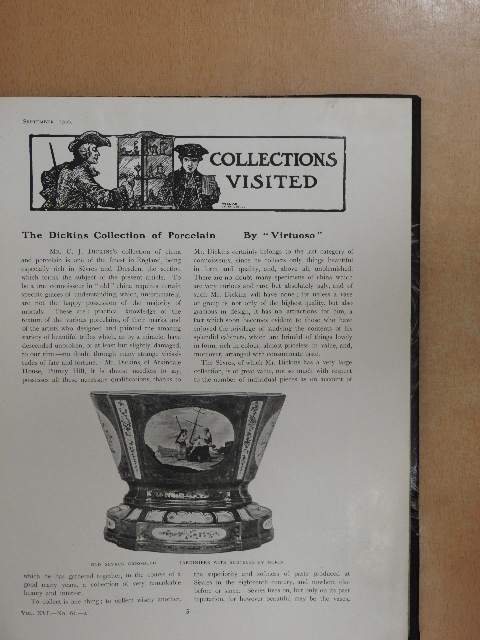
September, 190Ő.COLLECTIONS VI5ITEDThe Dickins Collection of PorcelainBy "Virtuoso"Mr. C. J. Dickins's collection of china and porcelain is one of the finest in England, being especially rich in Sevres and Dresden, the section which forms the subject of the present article. To be a true connoisseur in " old " china requires certain specific graces of understanding, which, unfortunately, are not the happy possession of the majority of mortals. These are : practical knowledge of the texture of the various porcelains, of their marks, and of the artists who designed and painted the amazing variety of beautiful trifles which, as by a miracle, have descended unbroken, or at least but slightly damaged, to our timeno doubt through many strange vicissitudes of fate and fortune. Mr. Dickins, of Arkindale House, Putney Hill, it is almost needless to say, possesses all these necessary qualifications, thanks toMr. Dickins certainly belongs to the last category of connoisseurs, since he collects only things beautiful in form and quality, and, above all, unblemished. There are no doubt many specimens of china which are very curious and rare, but absolutely ugly, and of such Mr. Dickins will have none ; for unless a vase or group is not only of the highest quality, but also gracious in design, it has no attractions for him, a fact which soon becomes evident to those who have enjoyed the privilege of studying the contents of his splendid cabinets, which are brimful of things lovely in form, rich in colour, almost priceless in value, and, moreover, arranged with consummate taste.The Sevres, of which Mr. Dickins has a very large collection, is of great value, not so much with respect to the number of individual pieces as on account ofold sicvres gros-bleujardiniere with subjects bv morinwhich he has gathered together, in the course of a good many years, a collection of very remarkable beauty and interest.To collect is one thing; to collect wisely another.Vol. XVI.no. 61.athe superiority and softness of paste produced at Sevres in the eighteenth century, and nowhere else before or since. Sevres lives on, but only on its past reputation, for however beautiful may be the vases,
Termékadatok
Cím: The Connoisseur Vol. XVI. 1906 [antikvár]
Kiadó: The Connoisseur
Kötés: Félbőr
Méret: 220 mm x 280 mm
Új vásárló vagyok!
új vásárlóval indíthatsz rendelést............