


kategória
szerző
cím
sorozat
betöltés...
kiadó
betöltés...
ISBN
évszám
ár
-
leírás
Előrendelhető
A mezők bármelyike illeszkedjen
A mezők mind illeszkedjen


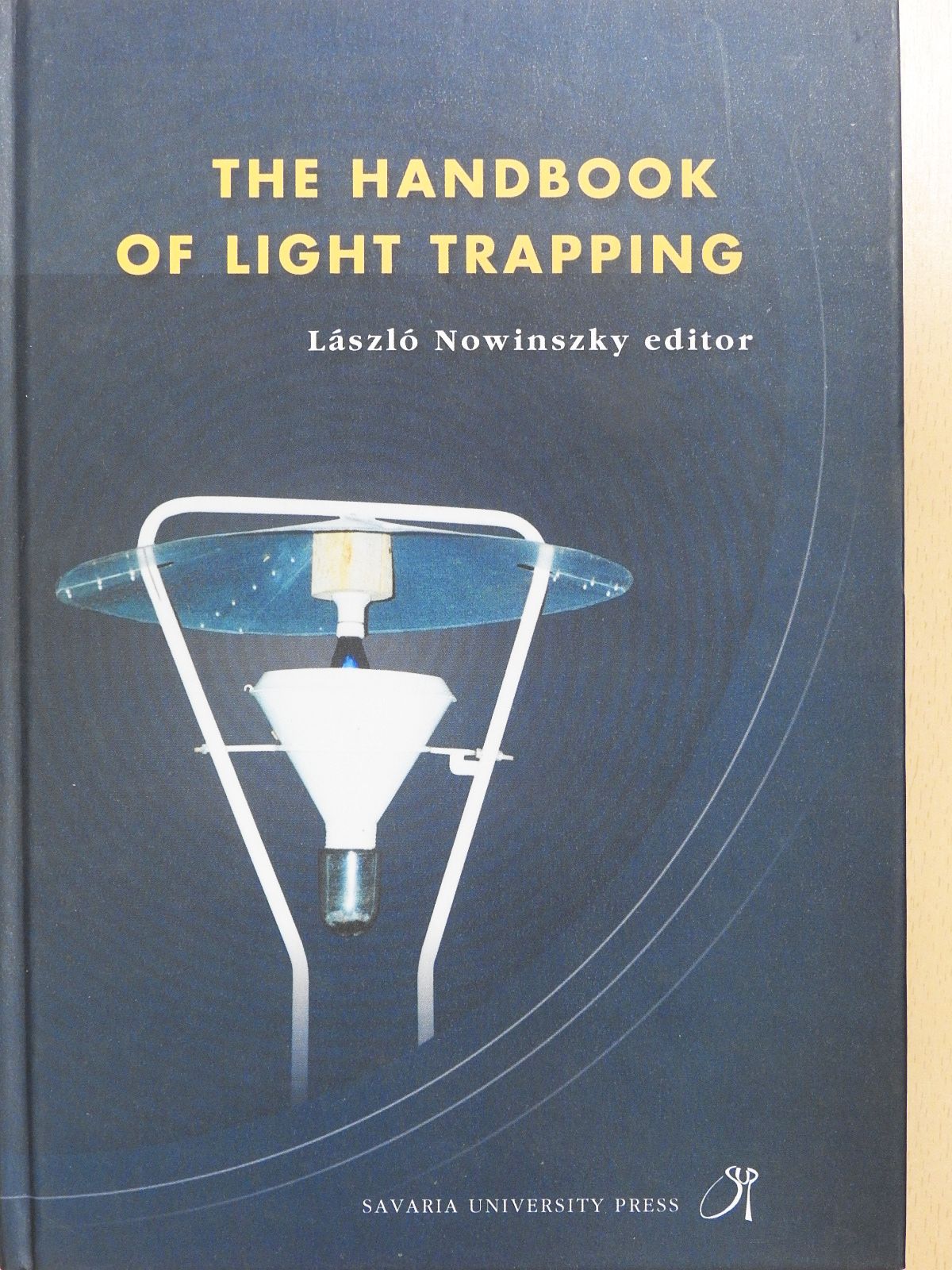
The handbook of light trapping (dedikált példány) [antikvár]
László Nowinszky

1. THE BEGINNINGS AND CURRENT POSITION OF LIGHT TRAPPING
Nowinszky L.
1. 1. The Beginnings of Light Trapping
As confirmed by ancient observation and records ever since Aristotle, nocturnal insects are attracted to artificial light (Kovács, 1962). The first Hungarian written document comes down to us from the IV"" century. Szilágyi reports on "bullets shooting out to candles", while Landovics writes that" moths are fond of candlelight" (Herczig, 1983a).
The first primitive light-traps were used by insect collectors (Wény, Horváth,...
online ár:
Webáruházunkban a termékek mellett feltüntetett fekete színű online ár csak internetes megrendelés esetén érvényes.
4980 Ft

Részletesen erről a termékről
Bővebb ismertető
1. THE BEGINNINGS AND CURRENT POSITION OF LIGHT TRAPPING
Nowinszky L.
1. 1. The Beginnings of Light Trapping
As confirmed by ancient observation and records ever since Aristotle, nocturnal insects are attracted to artificial light (Kovács, 1962). The first Hungarian written document comes down to us from the IV"" century. Szilágyi reports on "bullets shooting out to candles", while Landovics writes that" moths are fond of candlelight" (Herczig, 1983a).
The first primitive light-traps were used by insect collectors (Wény, Horváth, Gabrielli) as from the second half of the 19"' century (Herczig 1983a). On the turn of the century, Abafi-Aigner spreads out a white bed-sheet behind an oil-gas lamp and used dried apple for lures when collecting in the Buda hills. The first simple light-trap running on electric light was developed some 100 years ago (Lödl, 2000).
Referring to Roman authors (Columella, Plinius, Palladius) Steiner (1991) writes that beekeepers in the Roman Empire used light to kill wax moth (Galleria mellonella L.) from the century B. C. to the 4"^ century A. D. The first attempts to use light for plant protection purposes as a means of fighting pestiferous insects go back to the end of the 18"' cenmry. In 1787 Roberjot made fires in vineyards in the evening hours and thus burned the striped button imagoes that flew into the flames. In France and Algeria in the early 20"' century, Chatanay and Marchal tried to reduce the grape-berry moth population with the help of electric light (Szabó, 1969). Unfortunately, this method is unsuitable for significantly reducing the population of pestiferous species. In Hungary in 1909, professor Ede Kund of the Technical University used an acetilene lamp and a water barrel dug into the ground to find protection against striped button (Sparganothis pilleriana Schiff.) (Bálás and Sáringer, 1984).
Availing of biological control, fruit-growers in Australia also use light-traps to catch codling moth (Laspeyresia pomonella L.) and other insects, however, this method in itself does not offer a sufficient means of protection (Sexton, 2000). Placed in creameries, UV light-traps significantly reduced the number of houseflies. The traps also caught flesh flies, various tiny moths, beetles and mosquitoes (Goddard, 1993). Zaitseva (1991) designed a light-trap to catch insects causing damage in museums. The light source cast no shadow, but stood as an obstacle in the path of insects. Unable to fly away from the light source, they fell into the catch area. The trap was successful in exterminating several species of beetles (Dermestidae, Anobiidae, Lath-ridiidae, Tenebrionidae), moths (Tineidae) and flies (Phoridae).
In Korea, light-traps reduced by 60% the population of Citrus junos pests (Choi et al, 2001). Light-traps also proved to be an efficient means of control against Malaysian black bugs (Scotinophora coarctata Fabr.) of which 2-5 million individuals are claimed to be trappable over a single night (http://pne.gsnu.ac.kr/riceipm/scotinop.htm)
In China in 1993, 45 466 light-traps were applied in protection efforts against Heli-coverpa armigera Hbn. One trap running on a 450 W mercury vapour light source was deployed on every 6.06 hectares. This proved to be a perfectly sufficient method to protect the given area.
Termékadatok
Cím: The handbook of light trapping (dedikált példány) [antikvár]
Szerző:
László Nowinszky
Kiadó: Savaria University Press
Kötés: Fűzött keménykötés
ISBN: 963929098X
Méret: 170 mm x 240 mm
Új vásárló vagyok!
új vásárlóval indíthatsz rendelést............